




Japan at the 2026 World Cup: A Golden Generation and the Ceiling It Has Never Broken
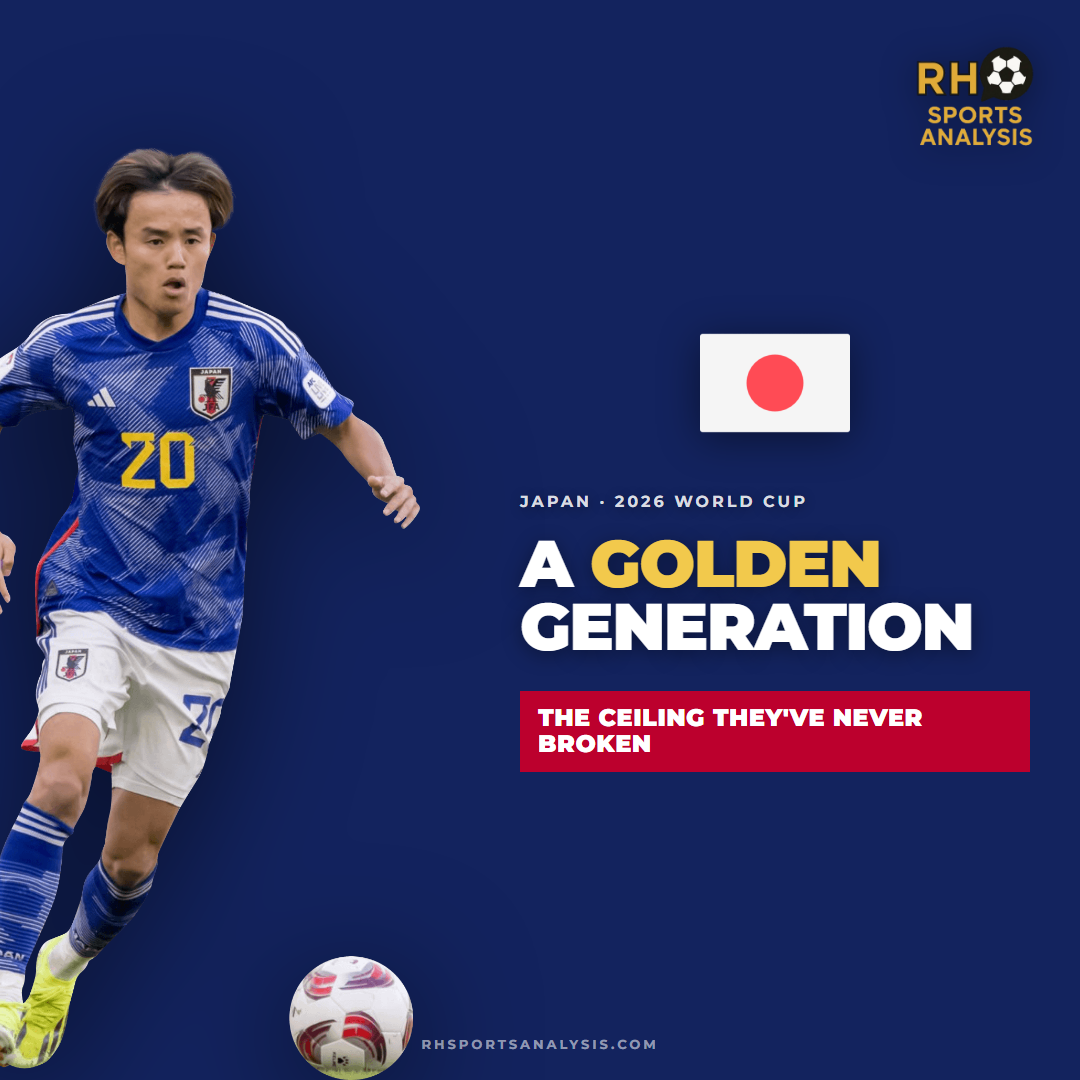
Japan beat England at Wembley. They still haven't reached a World Cup quarter-final.
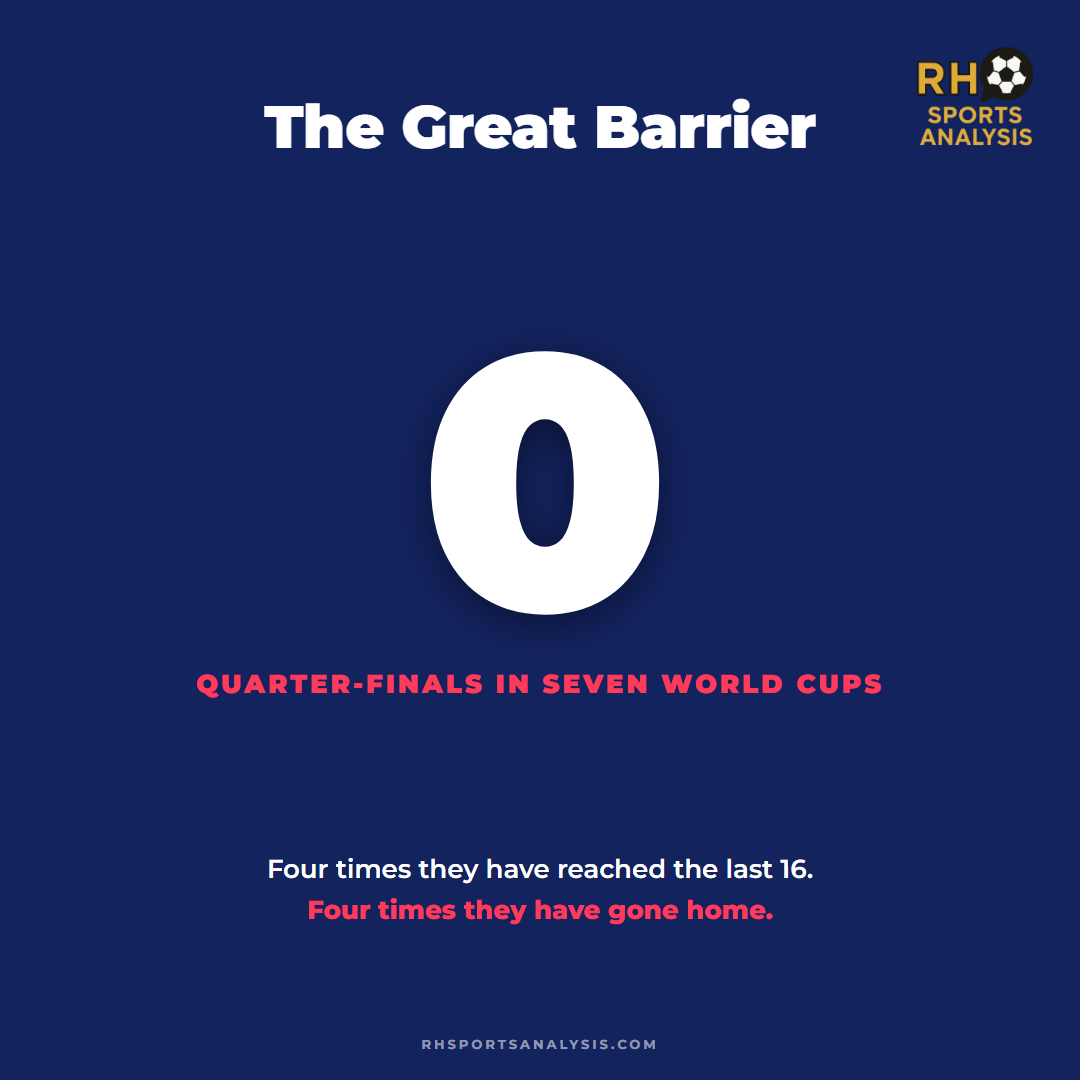
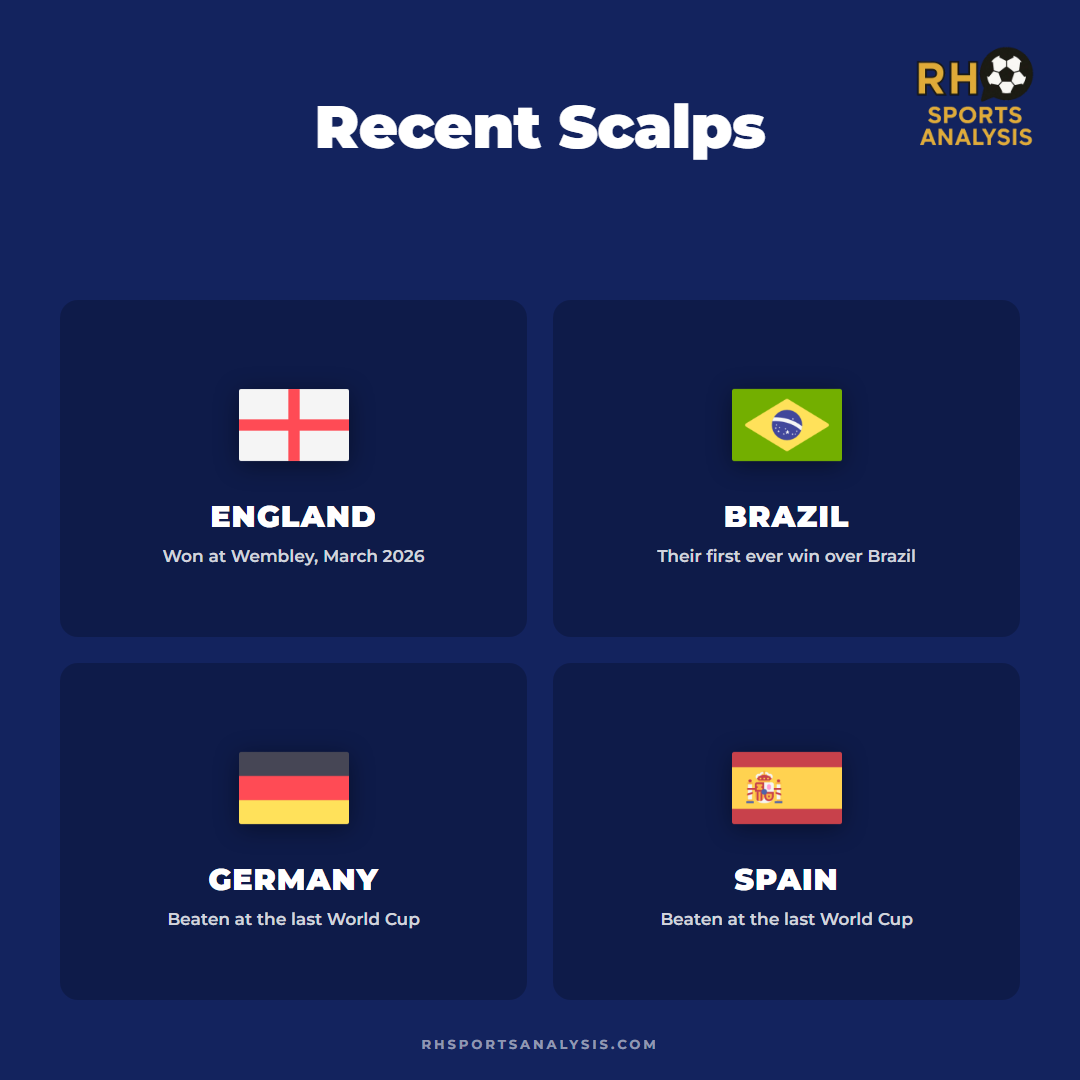
On the 31st of March 2026, Kaoru Mitoma scored at Wembley and Japan walked off having done something no Asian side had ever managed, beating England on English soil. It came three nights after they had seen off Scotland at Hampden, and it followed a run that already included Germany and Spain at the last World Cup and a first ever win over Brazil the previous autumn. Japan now beat the teams that used to be out of reach. What they have never done, across seven World Cups and four trips into the knockout rounds, is get past the last 16. That is the question the 2026 squad carries to North America: not whether they can live with the best, they have proved that, but whether they can finally win the match that turns a good tournament into a great one.
In 1998 not one Japan player was in Europe. Now only three are not.
Japan were the first nation outside the host countries to book their place at the 2026 World Cup, sealing it on the 20th of March 2025 with a 2-0 win over Bahrain in Saitama, and they did it with three games to spare. The campaign was a procession. They topped their third-round group with seven wins, two draws and a single dead-rubber defeat, scored 30 goals and conceded three, and in the round before that won all six matches without conceding once. It opened with a 7-0 dismantling of China in front of a full house in Saitama.
The deeper story is where the players come from: the squad Japan took to their first World Cup in 1998 was made up entirely of home-based players, not one of them at a European club. The squad heading to 2026 has 23 of its 26 at European clubs, six of them in the Bundesliga, with only three left in the J.League. Japan are ranked 18th in the world, the highest of any Asian side, and they arrive not as tournament tourists but as a team whose spine plays week in, week out against the players they will meet in June.

Moriyasu sat his team deep at Wembley, then won it on the counter
Hajime Moriyasu has been in charge since 2018 and is the first manager Japan have kept across two World Cup cycles, a measure of how much the federation trusts what he has built. His base shape is a 3-4-2-1, three centre-backs, wing-backs pushed high to provide the width, two holding midfielders in front of them and a front three built around Takefusa Kubo. What makes the side awkward to play is that the shape does not dictate the approach. Against teams they expect to dominate, Japan keep the ball and overload the flanks. Against the better ones, they drop into a compact block and wait.
Wembley was the clearest illustration: England had nearly 80 per cent of the ball in the opening stages and Japan let them have it, sitting deep, staying organised, and breaking only when the moment was on. The one goal of the night came on exactly that kind of counter, and England, for all their possession, never controlled a game they finished having created less than their visitors. Moriyasu has another habit worth noting: he wins games from the bench. Ritsu Doan came on to score the equaliser against both Germany and Spain in 2022, and the manager's substitutions have a way of turning matches Japan look like drawing.
The one weakness the team has not solved is the absence of a natural, ruthless number nine. Japan tend to create more than they score, and in tournament football, where a single clear chance can decide a last-16 tie, that has been the margin that hurt them before.
Mitoma watches from home, and Kubo inherits the team
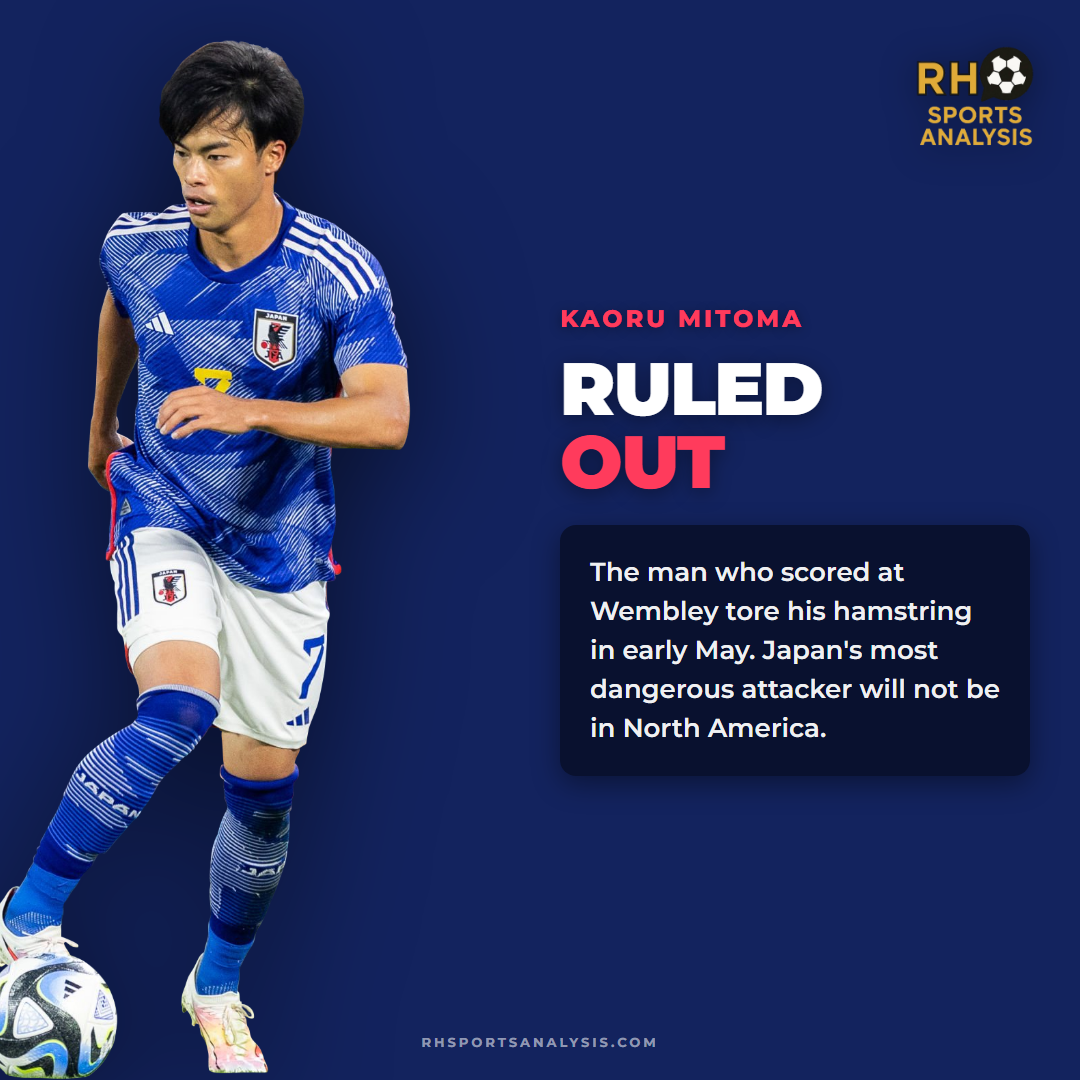
The man who scored at Wembley will not be in North America. Mitoma, Japan's most dangerous attacker, tore his hamstring playing for Brighton in early May and was left out of the squad on medical advice that he could not be made fit in time. It is the loss that reshapes the entire forward line.
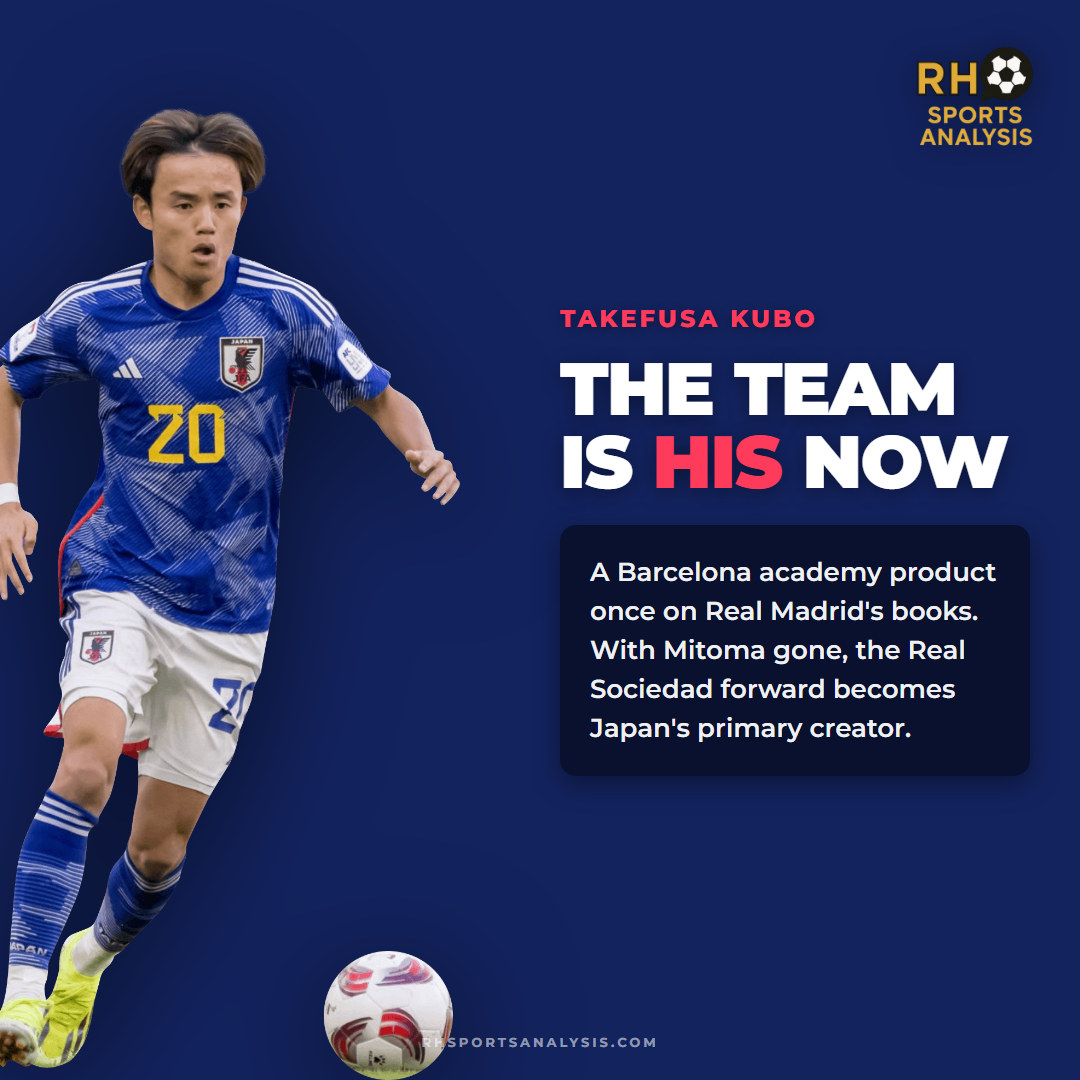
The player it leans on most is Takefusa Kubo. A product of Barcelona's academy and once on Real Madrid's books, the Real Sociedad forward has spent his career being called the Japanese Messi, and with Mitoma out he becomes the team's primary creator, the one expected to unlock the games Japan are supposed to win.
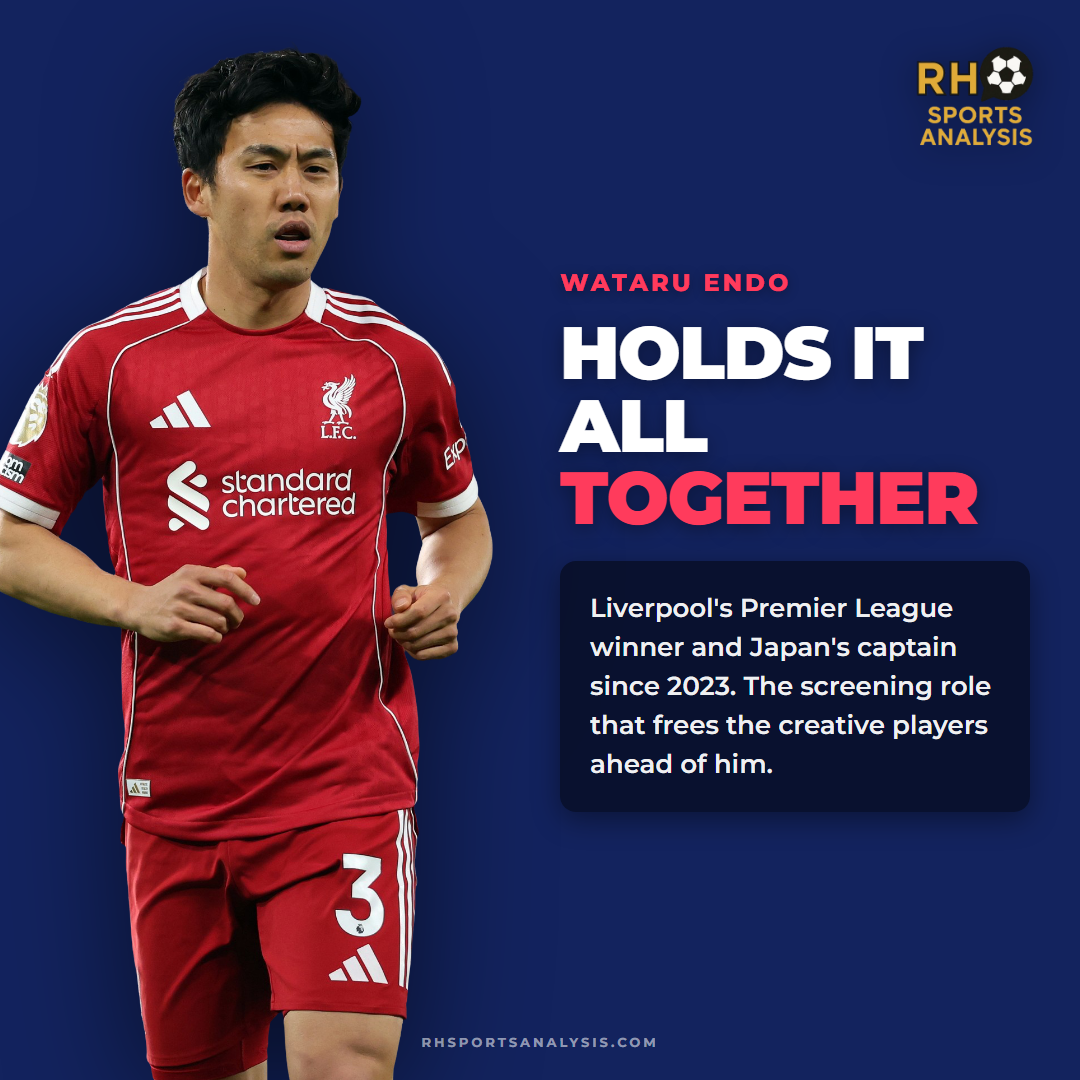
Behind him, Wataru Endo holds everything together. The Liverpool midfielder, a Premier League winner in 2025, has captained the side since 2023 and plays the screening role that frees the creative players ahead of him, though he arrives short of club minutes after an ankle injury kept him out for much of the second half of the season.
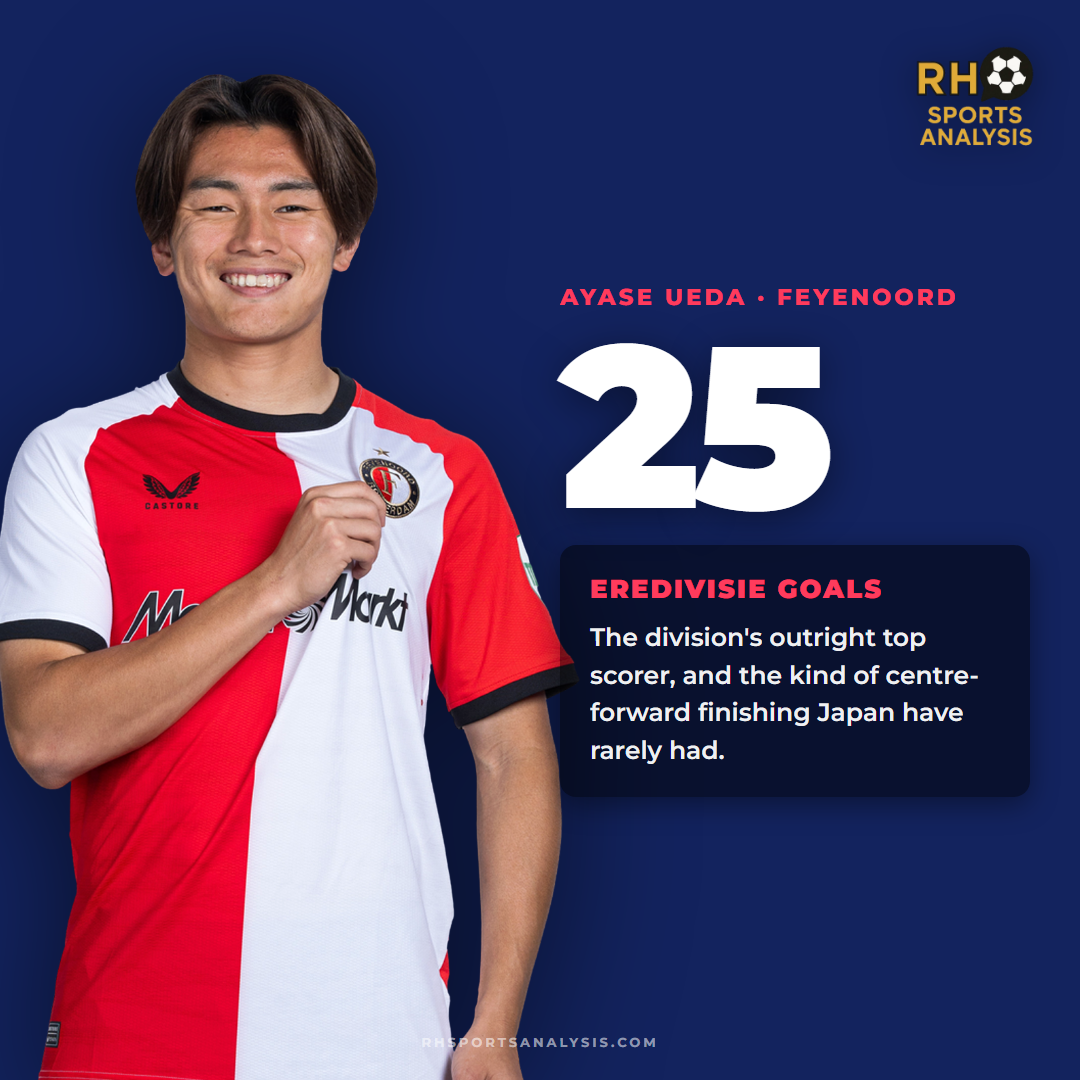
The form story up front belongs to Ayase Ueda. The Feyenoord striker finished the Dutch season as its outright top scorer with 25 league goals, a return Japan have rarely had from a centre-forward, and his finishing becomes the difference between making chances and taking them. Ritsu Doan adds the directness, a wide forward with a proven knack on the biggest stage, now a starter rather than the impact substitute he was in Qatar. In defence, Takehiro Tomiyasu's return matters more than his minutes suggest, the former Arsenal defender, now at Ajax, having played barely any football in two years before easing back through the warm-up matches, restoring top-flight defensive experience the back line had been missing.
The draw is kind, the target is a quarter-final, the history says last 16
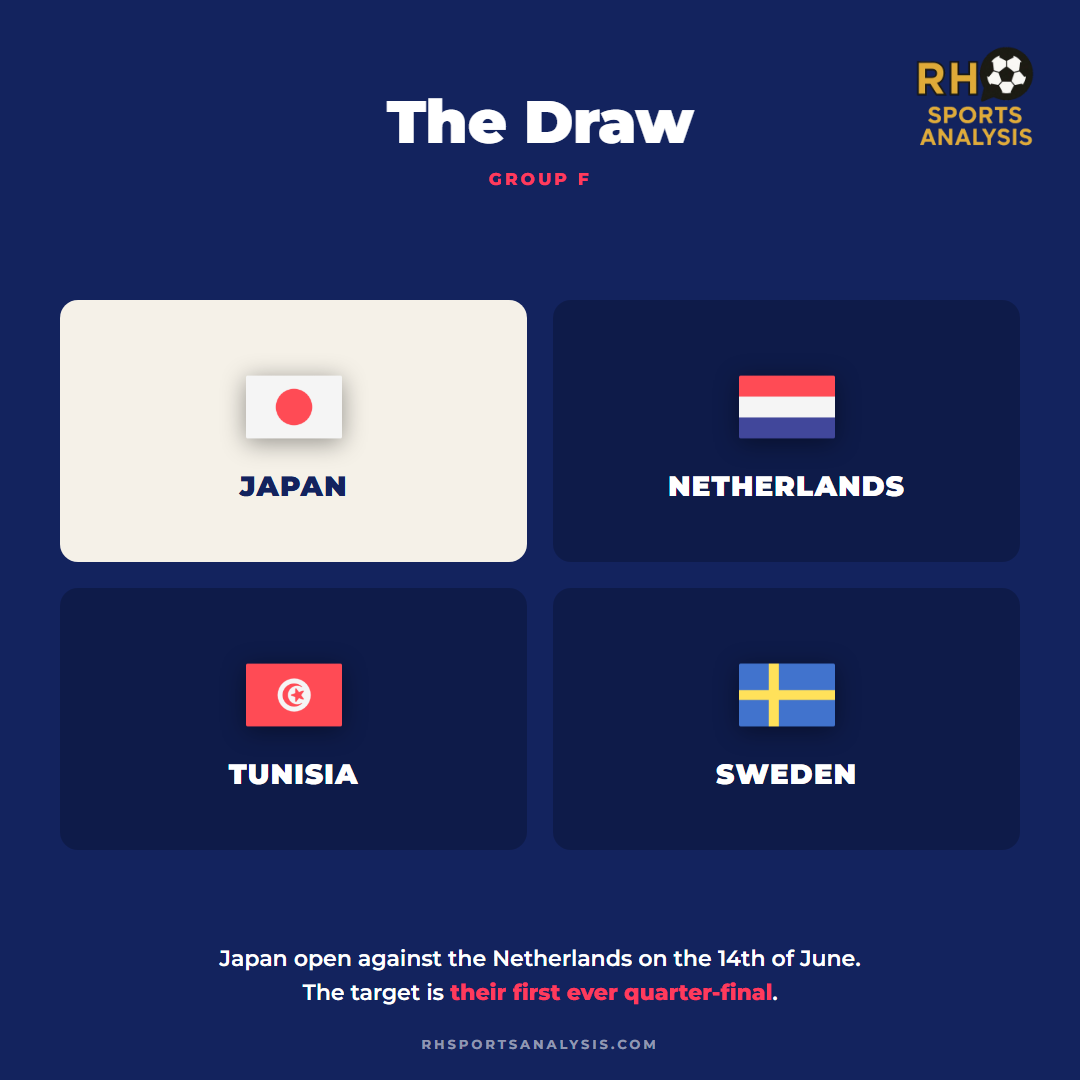
Japan landed well. Group F pairs them with the Netherlands, Tunisia and Sweden, a group with one clear favourite and real room behind it, and their fixtures open against the Dutch on the 14th of June before Tunisia and then Sweden. Come through, and they avoid the tournament's heavyweights until deep into the knockout rounds.
Japan are not short on ambition. The federation set out a formal pledge years ago to be world champions by 2050, with a place in the quarter-finals the stated target for this tournament, and Moriyasu has gone further still, naming the trophy itself as the goal.
Set against that, the history is sobering. Japan have reached the last 16 four times and gone out four times, and they have won just four of their last 13 World Cup matches. The honest reading is that the group is navigable, that a last-16 place is a fair expectation rather than a hope, and that the quarter-final is exactly where the road has always turned steep.
The team that beats everyone, and the one result that would make it matter
This is a side that has stopped being a novelty. Japan no longer spring upsets, they win the fixtures that used to be upsets, and they go to North America with a squad drawn almost entirely from Europe's leagues and a manager trusted to take them where no Japan team has been. For all of that, the thing that has always undone them is not the quality of the opposition. It is the single knockout match they cannot seem to win.
Japan have run out of giants to be frightened of.
And they go without the man who beat England. Mitoma's hamstring has pulled their best attacker out of a tournament his team spent four years building towards, and it leaves the rest of them to prove the project was never about one player. The only opponent left that keeps beating them is the version of themselves that reaches the last 16 and goes home, and June will decide which of the two turns up.
FAQs
Why are Japan called a golden generation?
23 of their 26-man squad play at European clubs, and they have beaten England, Germany, Spain and Brazil, sides once out of reach.
What is Japan's best ever World Cup result?
The last 16, which they have reached four times. Across seven World Cups they have never made a quarter-final.
Is Kaoru Mitoma in Japan's 2026 World Cup squad?
No. Mitoma tore his hamstring playing for Brighton in early May and was ruled out, leaving Takefusa Kubo as the team's primary creator.
Who are Japan playing at the 2026 World Cup?
Japan are in Group F with the Netherlands, Tunisia and Sweden, opening against the Netherlands on the 14th of June.
Who is Japan's manager?
Hajime Moriyasu, in charge since 2018 and the first manager Japan have kept across two World Cup cycles, playing a 3-4-2-1.
Related reading
Senegal at the 2026 World Cup: A Golden Generation's Last Shot, and a Title Taken Away
World Cup 2026: The 48-Team Format, Explained
Messi's Last World Cup: Nothing Left to Prove
Our members receive data-driven selections across every sport we cover. Are you in?