




How Arsenal Won the League: The Boring Revolution
Declan Rice walked off the Etihad pitch having just lost 2-1 to Manchester City, saying three words: “It's not done.” The nine-point lead Arsenal had built by the start of April was three points by full time, and City still had a game in hand. Thirty days later, Arsenal were champions for the first time since the 2003-04 Invincibles.
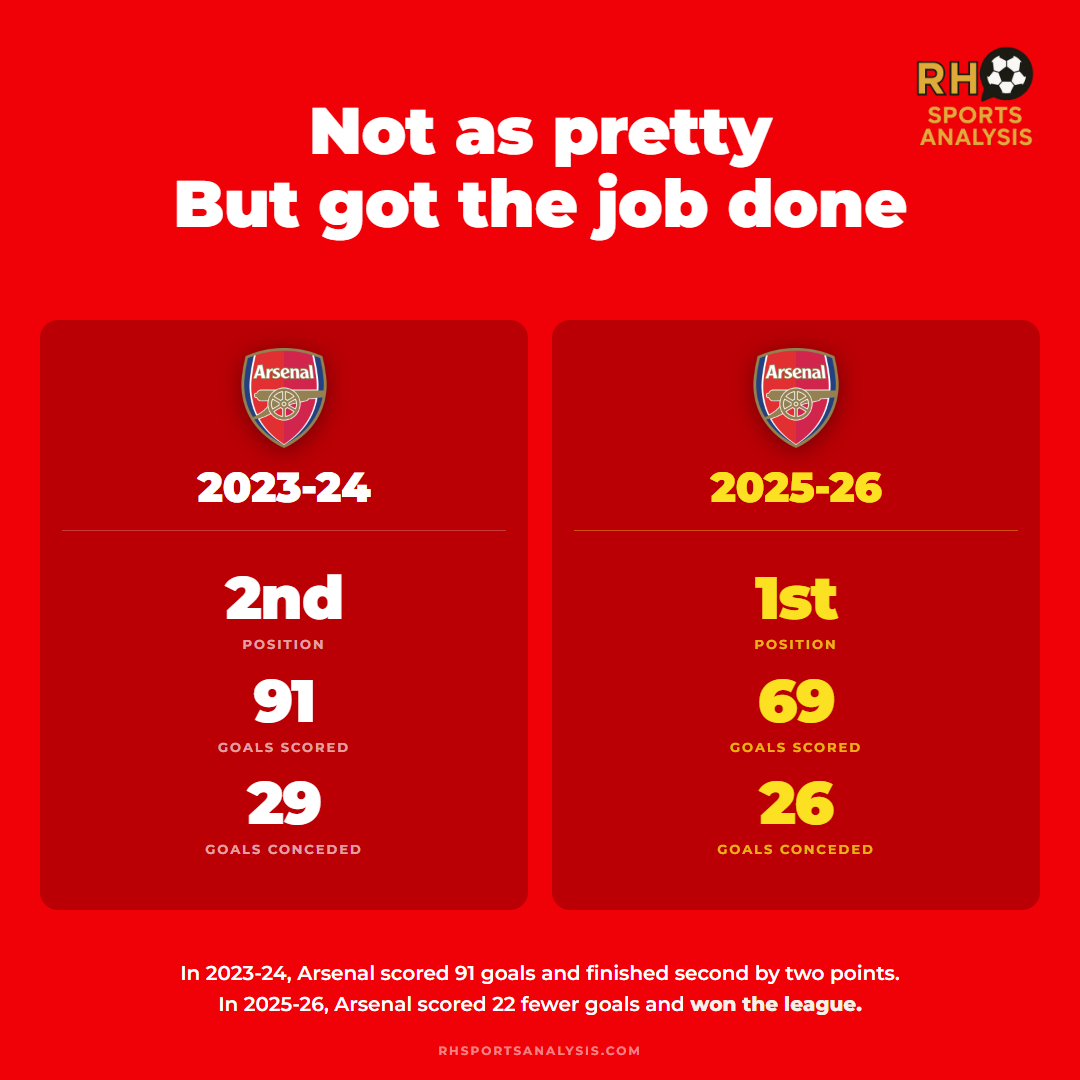
The story between those two moments is the story of the title, and it is a story Mikel Arteta had been telling the players for two years. That season Arsenal scored 91 league goals, the most by any Arsenal side since 1952-53, and finished second. In 2025-26 they scored 22 fewer, conceded three fewer, and finished first. The title that Arteta had spent four years getting close to was won by a team that had deliberately become less interesting to watch, and significantly harder to play against.
The defence that gave nothing
Arsenal held their opponents below 0.50 expected goals in 18 of their 37 Premier League matches, which translates as half a chance to score across 90 minutes; Manchester City, the next-best, managed it twice.
Across all competitions, Arsenal kept 30 clean sheets, the club's best return since 1993-94. Raya became the fourth goalkeeper in Premier League history to win the Golden Glove three years in a row, after Pepe Reina at Liverpool, Joe Hart at Manchester City, and Ederson, also at Manchester City.
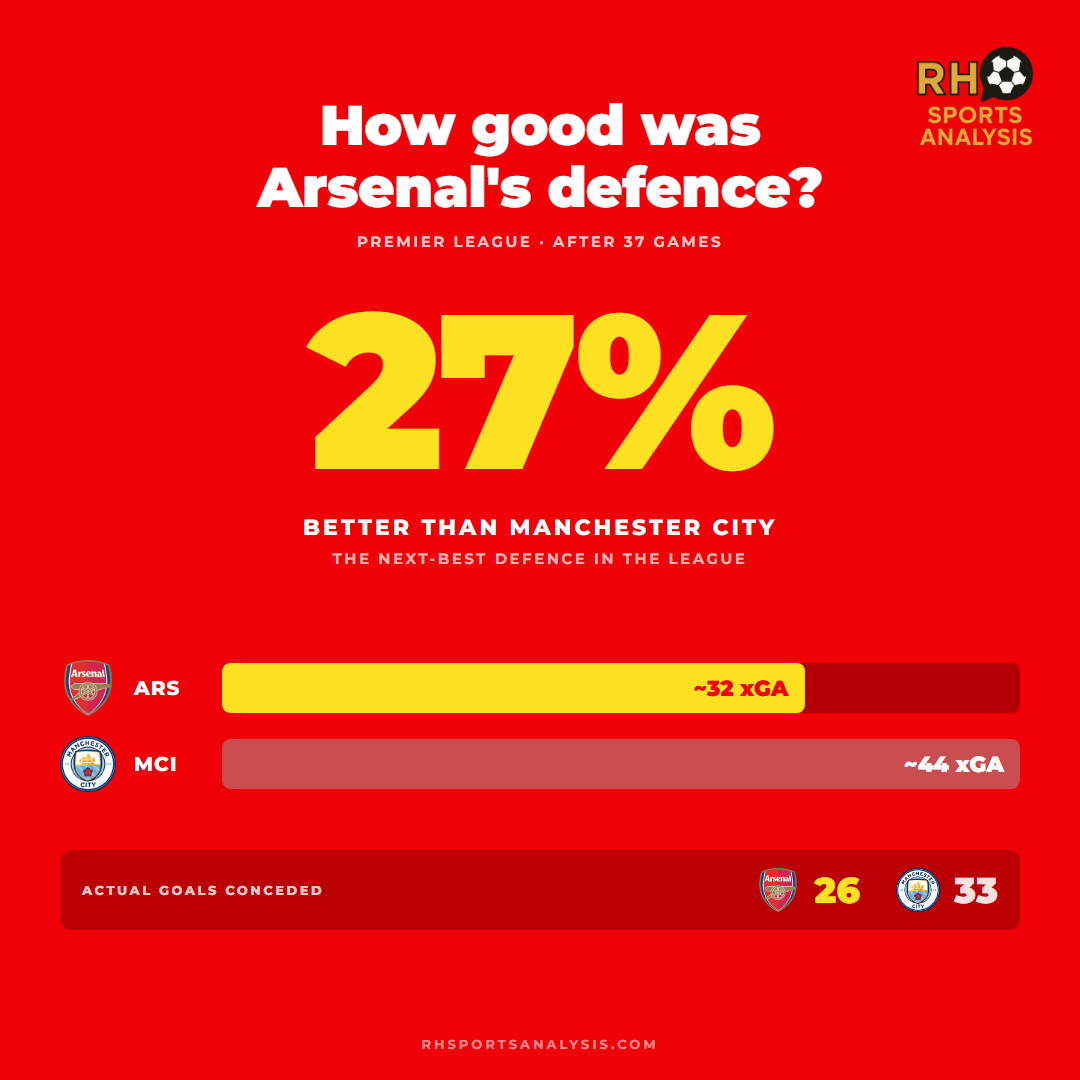
Underneath the counted goals, the expected goals tell a story that is even more lopsided. Arsenal allowed around 32 expected goals against across the season. The second-best defence in the league, also Manchester City, allowed around 44. That is a gap of about 27 per cent in Arsenal's favour. Arsenal were a defensive outlier this season by a margin no other side in the league got close to.
One mistake between them all season
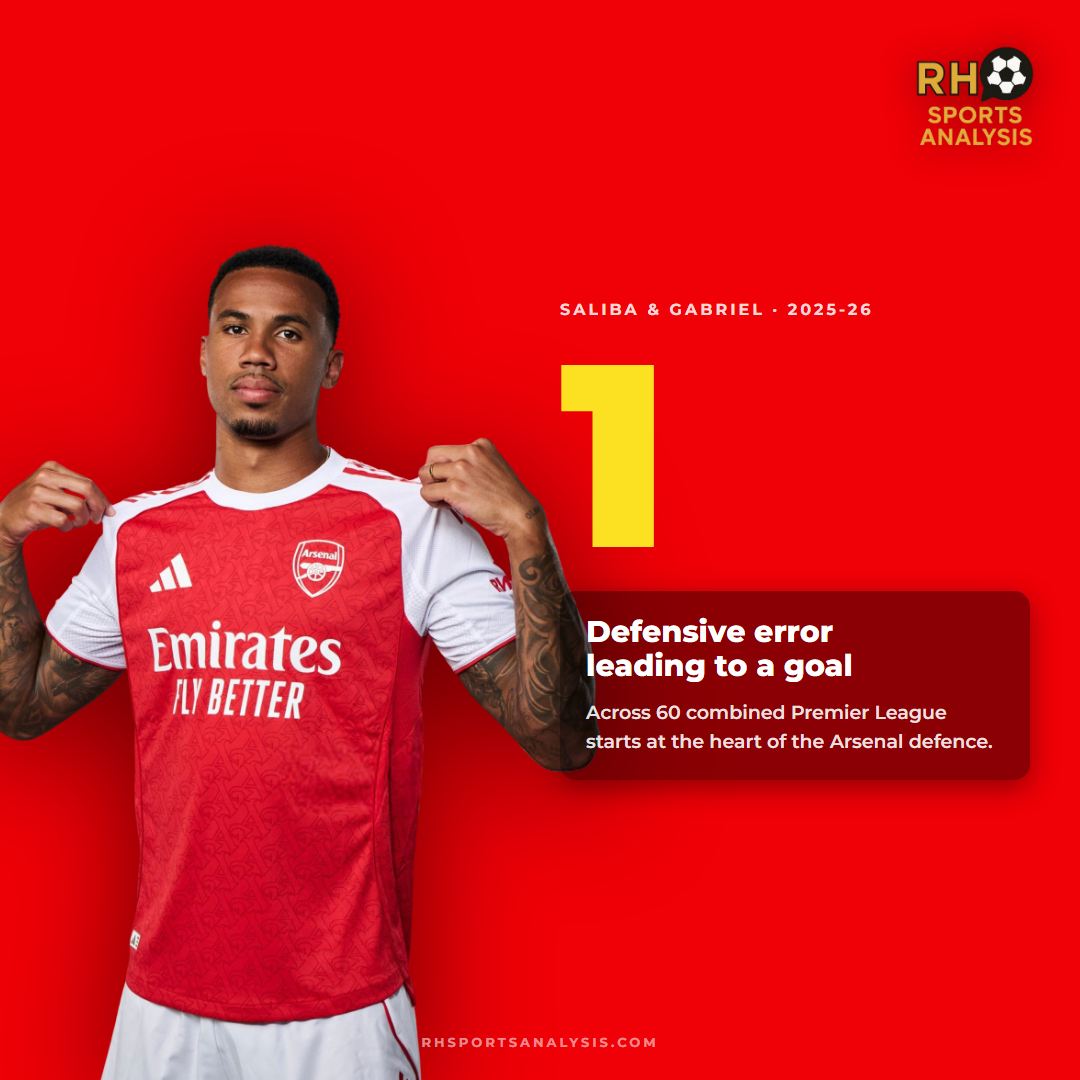
In their 30 starts each across the league season, William Saliba and Gabriel Magalhães made one mistake between them that led directly to a goal. The error was Gabriel's. Saliba's record across more than 2,000 league passes was zero defensive errors and a 92.9 per cent pass completion rate. The pair finished with 16 and 17 clean sheets respectively, Gabriel one ahead of his partner, and an aerial duel win rate of 62.2 per cent for the Brazilian that was the highest among the back four.
“For me, yes, we have the best partnership in the world.”
— William Saliba, earlier in 2026
He hedged immediately that they would only know for sure if they won the title.
The depth around them mattered just as much. Ben White started only nine league matches after knee surgery in November and a hamstring injury in May. Jurriën Timber took the right-back role for 28 starts. Riccardo Calafiori made 21 league starts at left-back. Piero Hincapié, signed on a deadline-day loan as cover, started 19 Premier League matches once injuries opened the door.
The Arsenal that won the title was not built on the strength of an unchanged back four. It was built on the ability of a back four that changed across the season to keep playing the same way regardless of who was in it.
What Raya was worth was gold
Arsenal's expected goals against was around 32 and they conceded 26, a difference of six goals largely down to David Raya. A goalkeeper who saves six expected goals more than the defensive structure entitled him to across a 37-game season is doing the underrated job of his career. The structure in front of him gave him the lowest expected-goal workload in the league. Raya turned that workload into the smallest goals-conceded total in the division.
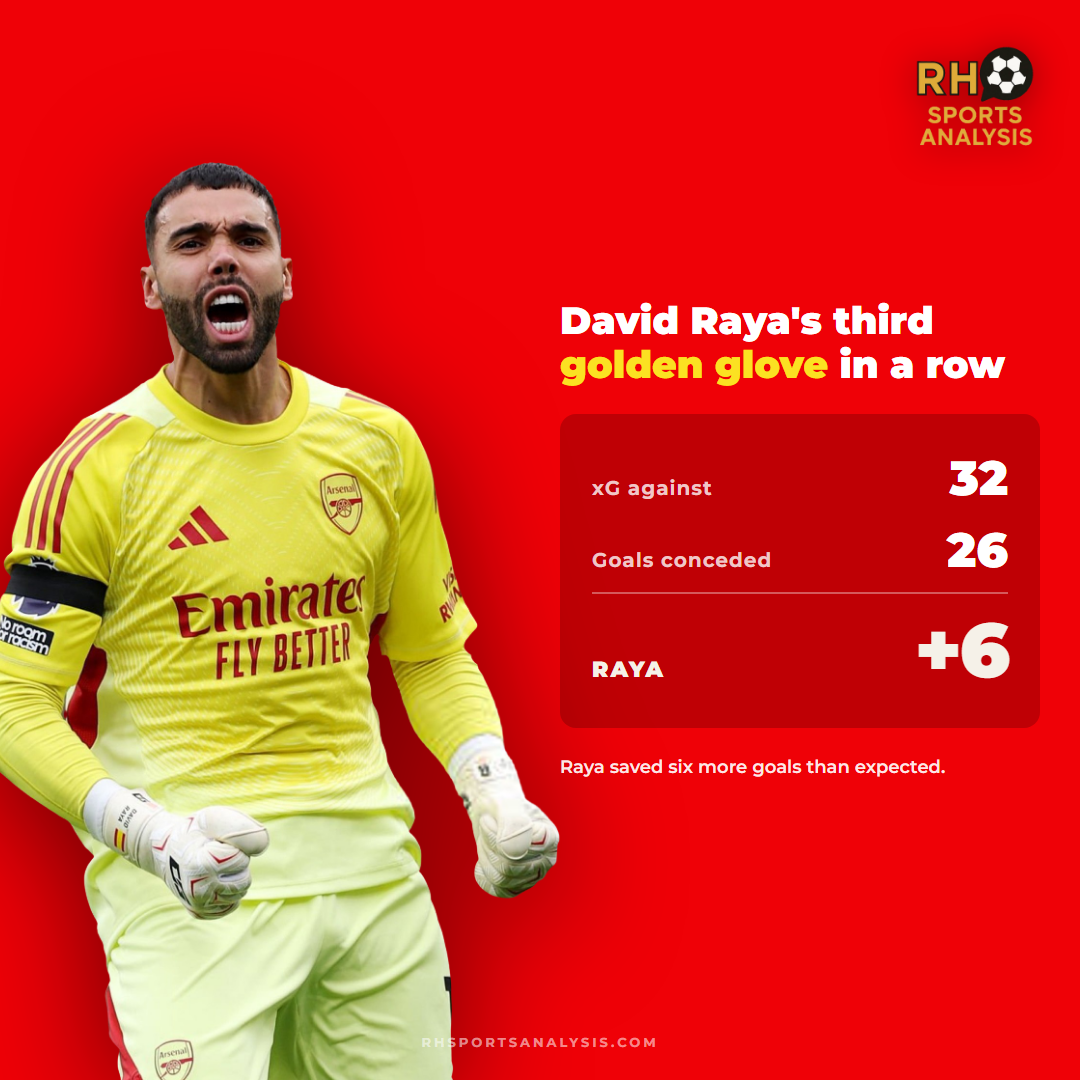
Jamie Carragher said the decision to sign Raya in 2023 had not been universally popular. “It was a brave decision. He's been a revelation.” Raya himself was less effusive about his third Golden Glove. “It's not just me. It starts from everybody on the pitch and it's a collective effort, even if it's the keepers who get the award.”
What changed between three second-place finishes and a first
Three things changed between Arsenal finishing second three times and finishing first. The personnel changes were the most visible. The summer of 2025 brought eight new senior signings, with Viktor Gyökeres, Martín Zubimendi, Eberechi Eze and Cristhian Mosquera the headline names. Less attention was paid to the change in the coaching staff that same summer, when Gabriel Heinze replaced Carlos Cuesta as a first-team coach in July. The third change was the most important and the hardest to identify in the moment: the football itself became more conservative, less expansive, and harder for opponents to handle.
The data on the conservatism is direct. Arsenal averaged 56.05 per cent possession this season, which placed them fourth in the league, behind Manchester City, Liverpool and Chelsea. They attempted 45 long passes per game. They were ranked first in the league for passes per defensive action against them, which is the inverse of the more familiar PPDA and which means that opposition teams sat off Arsenal rather than pressing them. The team with the reputation as the league's classic possession side spent most of the season being given the ball by teams that did not want it.
The shape was a hybrid. In possession Arsenal moved between a 4-3-3 and a 4-2-3-1, with Declan Rice operating higher up the pitch than he had the previous season, his passes into the final third per 90 minutes rising sharply from the previous campaign. Out of possession the team settled into a 4-4-2 mid-block, with Saliba and Gabriel holding a high line behind it so that Zubimendi at the base of midfield had only short distances to recycle the ball through. The high line was not the press-and-attack style Liverpool used under Klopp. It was a way of squeezing the pitch vertically while leaving the horizontal work to the eight outfielders ahead.
Arteta had been telling the players what he wanted from the structure for more than a year before they delivered it. In a March 2024 training-ground interview, he said: “The key is that everybody goes 100 miles per hour for every ball. Our strikers, our wingers, our attacking midfielders, they have a love for defending. Installing that within the players is something really important. Applauding and paying compliments to that as well, so when those defensive actions happen, they are valued as much as the attacking ones. If you want to win consistently, that door has to be shut.”
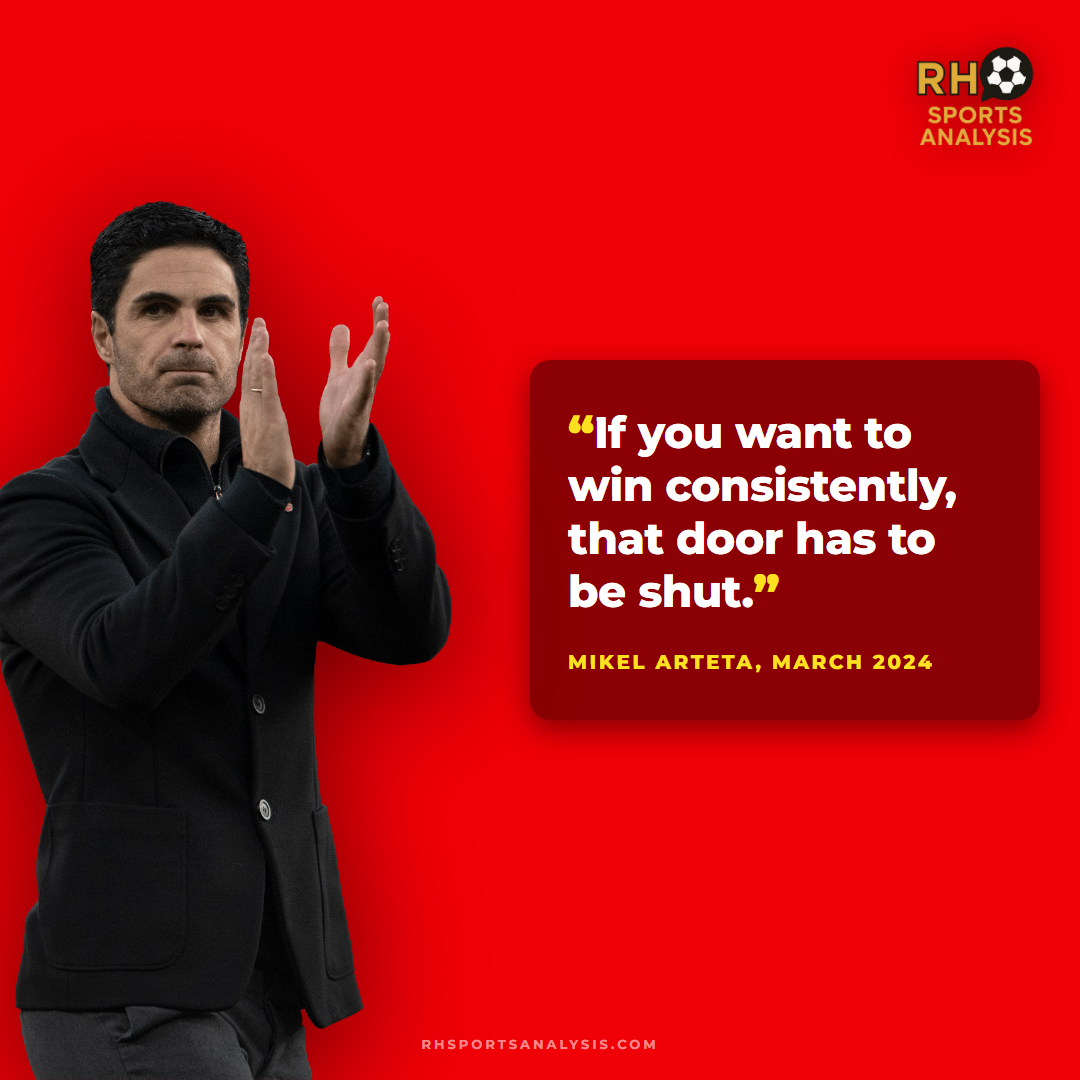
Two seasons of finishing second followed that interview, both played by an Arsenal team that still ranked among the most attacking in the division. In the third season, with Heinze on the staff and a team that took fewer risks on the ball, the door was finally shut.
What broke in April, and what didn't break with it
The structural collapse the data did not quite agree with arrived on the 11th of April. Arsenal lost 2-1 at home to Bournemouth in a lunchtime kick-off they had been favoured to win heavily. The story written at the time was about a defence that had been pulled apart. The numbers say something different. Bournemouth's expected goals total for the match was 1.39, below Arsenal's season average. The two goals came from a deflection-and-individual-error sequence in the first half and a Bournemouth high-press turnover late on. Arsenal's actual problem was finishing rather than defending; Havertz, Jesus and Gyökeres all missed clear chances. The narrative was already calibrated for Arsenal collapse mode.
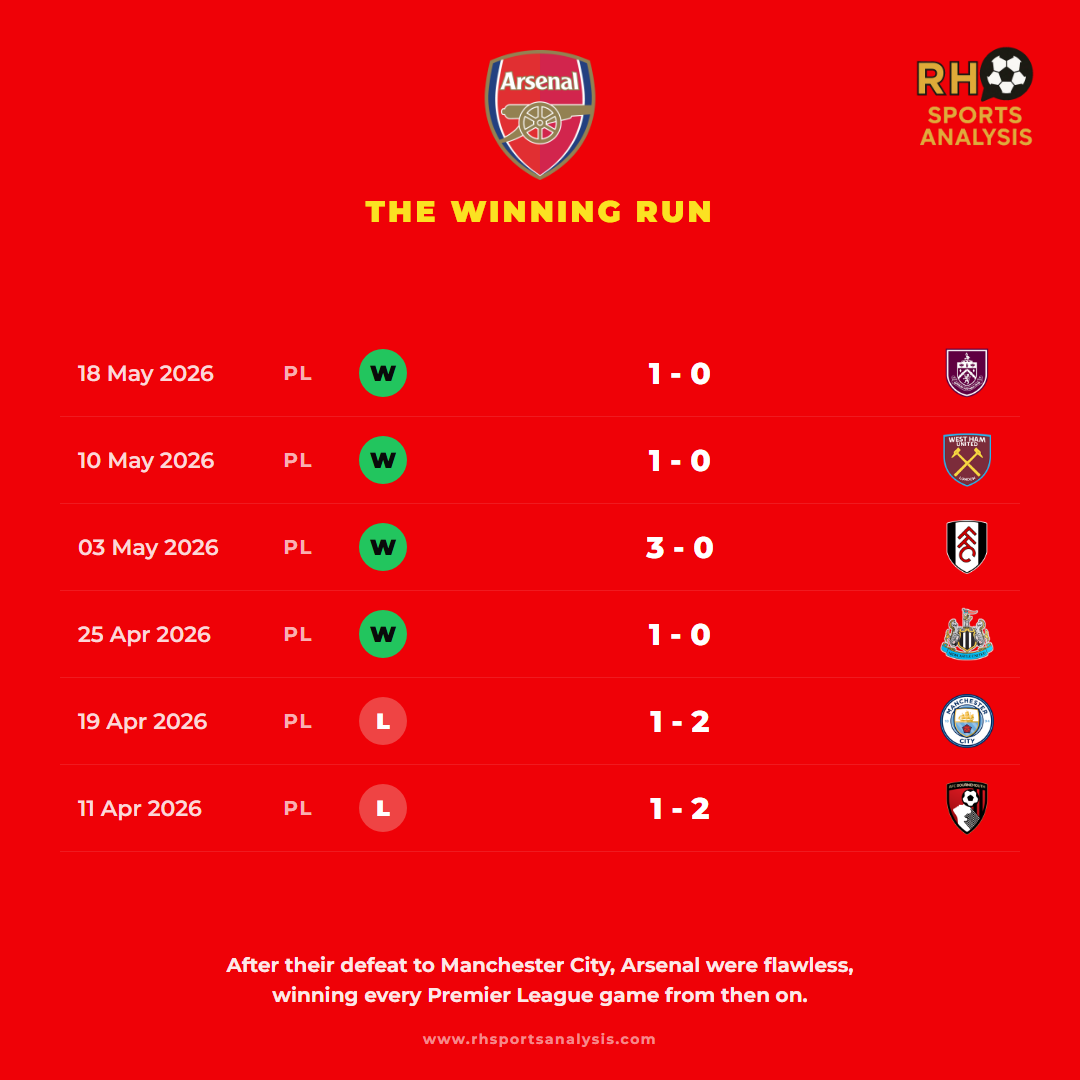
Eight days later at the Etihad, Arteta departed from the season-long 4-4-2 mid-block, switching to a high man-marking press with Rice shadowing Rodri and Ødegaard shadowing Bernardo Silva. The gambit worked for half an hour before City unpicked it. Arsenal's expected goals against for the 90 minutes was 2.62, nearly three times their season average, and the only Premier League fixture all season the structure actually broke.
At the final whistle Rice was caught on camera saying the line that ran on every Arsenal-related broadcast for the next week. “It's not done.” Arsenal had walked off the Etihad three points clear with City still to play a game in hand. Pep Guardiola, asked about Arsenal afterwards, said: “It's a good advert for the Premier League. They don't allow you to go through your process. They are so aggressive, good in the duels, one of the most competitive teams I ever faced in my career in terms of duels, one vs one, long balls. Rice on the second balls is fantastic.” Then, a beat later: “So far, they are the best team in England.” The team that had just won the match was already conceding that the team that had just lost it was the better side over the season.
What followed was not a tactical rethink. Eze edged Newcastle 1-0 with a goal that took Arsenal's tally of league goals from corners to 17, breaking the joint Premier League single-season record. Fulham were seen off 3-0 a week later. At West Ham a 95th-minute Callum Wilson equaliser was disallowed after a four-minute VAR review identified a foul on Raya at the corner. Against Burnley, Havertz headed in a Saka corner for the 18th Arsenal league goal from a corner that season, the assist taking Saka past 50 Premier League goals and 50 assists.
0
Arsenal goals from corners in the league season. A single-season Premier League record, broken twice in three weeks during the title-sealing run.
It added up to three weeks, four consecutive clean sheets, and two further extensions of the same Premier League single-season set-piece record. The title was sealed on the 19th of May, while the Arsenal squad watched Bournemouth and Manchester City draw 1-1 together at the London Colney training centre. Declan Rice posted a dressing-room photograph on Instagram with a caption that read “I told you all... it's done.”
Top of the league, mid-tier in the xG era, identical to the Invincibles
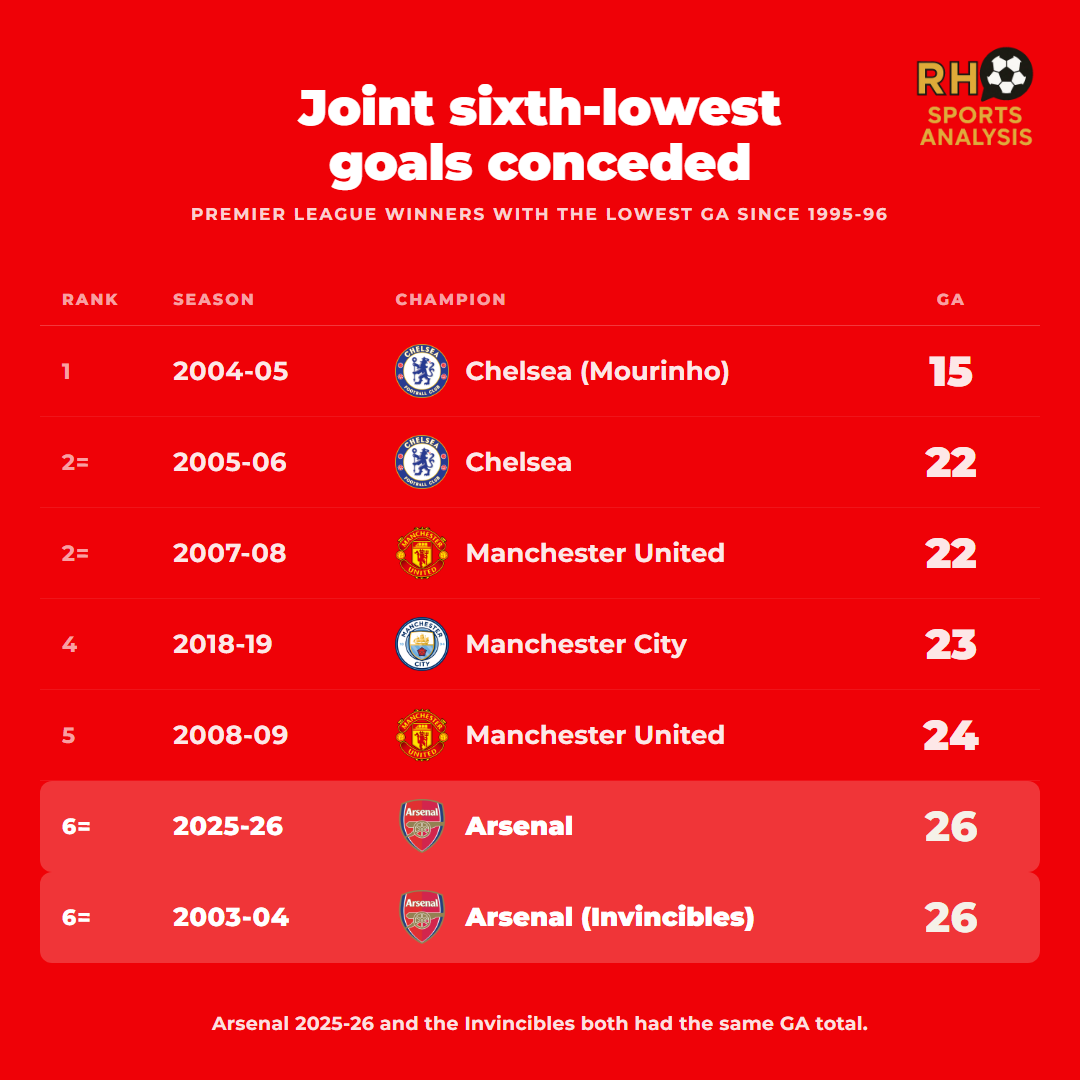
Arsenal's 26 goals conceded is the lowest of any team in the Premier League this season and the joint sixth-lowest of any team to win the league since the league moved to 38 games in 1995-96. The teams ahead of them are Chelsea in 2004-05 (15 goals conceded under José Mourinho), Manchester United in 2007-08 and Chelsea in 2005-06 (both 22), Manchester City in 2018-19 (23), and Manchester United in 2008-09 (24). Below them, in joint sixth, are the 2003-04 Invincibles, who conceded exactly 26 across 38 games. Arsenal will play 38 games once the trip to Crystal Palace on the 24th of May is in the bank. The parity with the Invincibles holds if they keep one more clean sheet.
By the more recent measure of expected goals against, Arsenal sit 12th on the all-time list going back to 2014-15. The teams ahead of them are mostly Pep Guardiola's Manchester City. The Centurions of 2017-18 hold the record, City matched it in 2021-22 and again in 2018-19. After them comes Antonio Conte's title-winning Chelsea side of 2016-17, then Jürgen Klopp's title-losing Liverpool of 2018-19, who finished as runners-up to City with the highest points total in English top-flight history for a side that did not win the league. Arsenal's closest comparators in the expected-goals era are the two Liverpool title-chasing sides who came close and didn't win, plus Conte's Chelsea, which did. None of the other comparators within a couple of goals on expected goals against actually won the title that year.
The lineage Arteta now sits in is not the one most expected him to join. The flair coaches that defined the modern Premier League title-winner: Wenger, Klopp, Guardiola, Ferguson at his best. The pragmatists who won it the other way: Mourinho at Chelsea in 2004-05, Conte at Chelsea in 2016-17, and now Arteta at Arsenal in 2025-26.
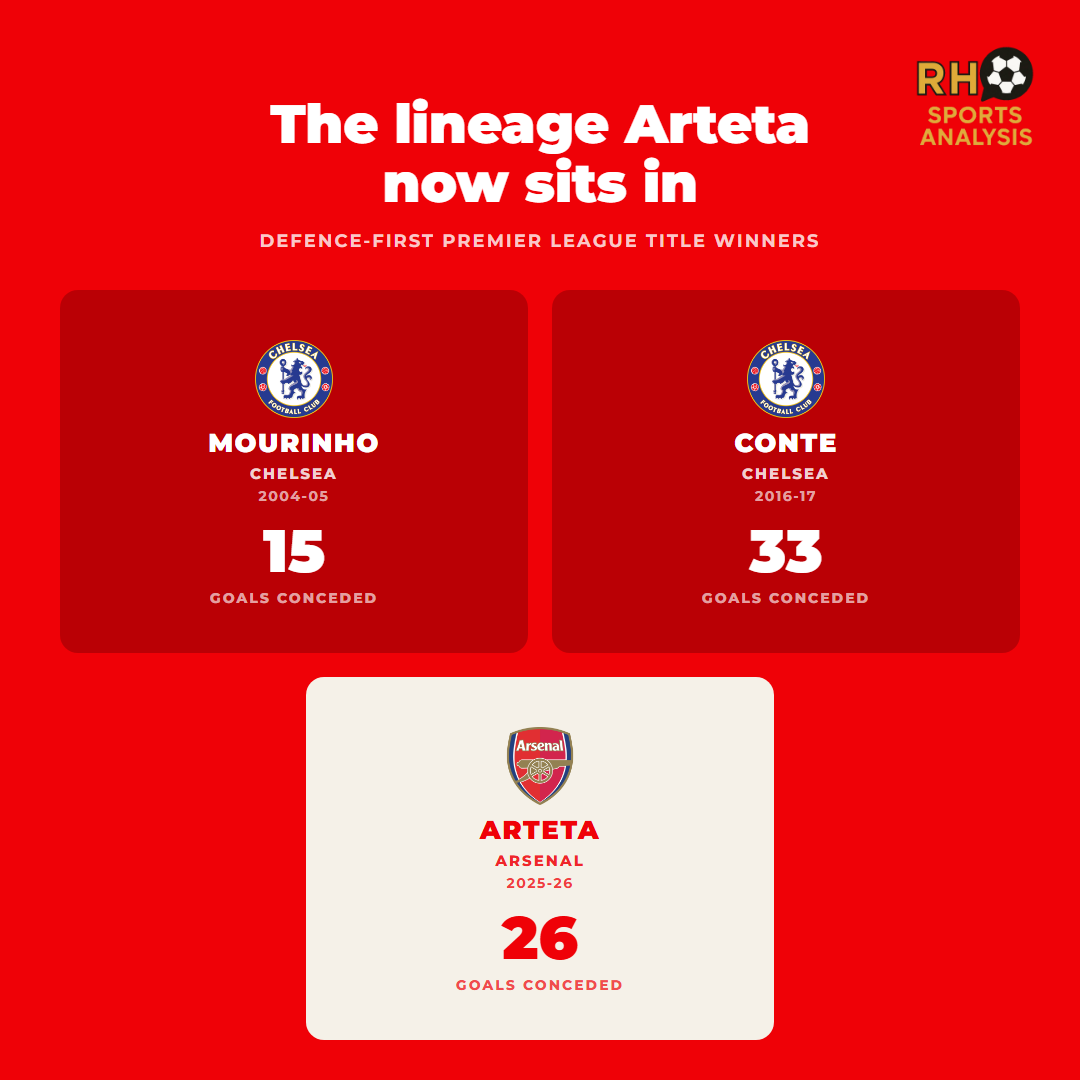
22 years ago Arsène Wenger said the thing his title-winning Arsenal side never got credit for was the defence.
“It's unbelievable that that defence never gets any credit. They didn't lose a game and yet no-one speaks about them.”
— Arsène Wenger on the 2003-04 Invincibles
“It was Lauren, Kolo Touré, Sol Campbell and Ashley Cole. They were absolutely exceptional.” The conversation about the 2003-04 team was, and largely still is, about the unbeaten season. The conversation about the 2025-26 team is already pivoting to Viktor Gyökeres and the Champions League final in Budapest. Two decades on, the same fate may await Arteta's defence.
The plan, articulated in 2024
The title was won by a structural choice, and the choice had been articulated long before it was executed. Two seasons of finishing second followed. The 2025-26 Arsenal team that finally won the title was, by Arteta's own quote and by the data underneath it, a deliberately less ambitious team than the two that had failed before it. That is the story of the title.
“Arsenal have had the best defence, they have not had the best attack, but as an overall unit Mikel Arteta has done incredibly well.”
— Alan Smith, 19 May 2026
Alan Smith said the thing aloud on the title-day broadcast: Arsenal had the best defence, they did not have the best attack, and across the team as a unit Arteta had done incredibly well. Two decades on, the same pattern Wenger complained about is already forming around Arteta's team. The defence that won this title will be talked about briefly in May, replaced in the conversation by the upcoming Champions League final. It will be revisited decades from now when somebody points out that nobody ever really talked about it. Arteta will not mind. He has done what he had to do to win a title for the Gunners, even if it was boring and ugly.
Related reading
Just How Good Really Is Gyökeres?
PSG vs Arsenal Preview: The Rematch in Budapest and Dembélé's Title Defence
Man City vs Arsenal Preview: The Rematch 28 Days On With The Premier League Title On The Line
Our members receive data-driven selections across every sport we cover. Are you in?