




The 2026 F1 Reset, Explained Properly
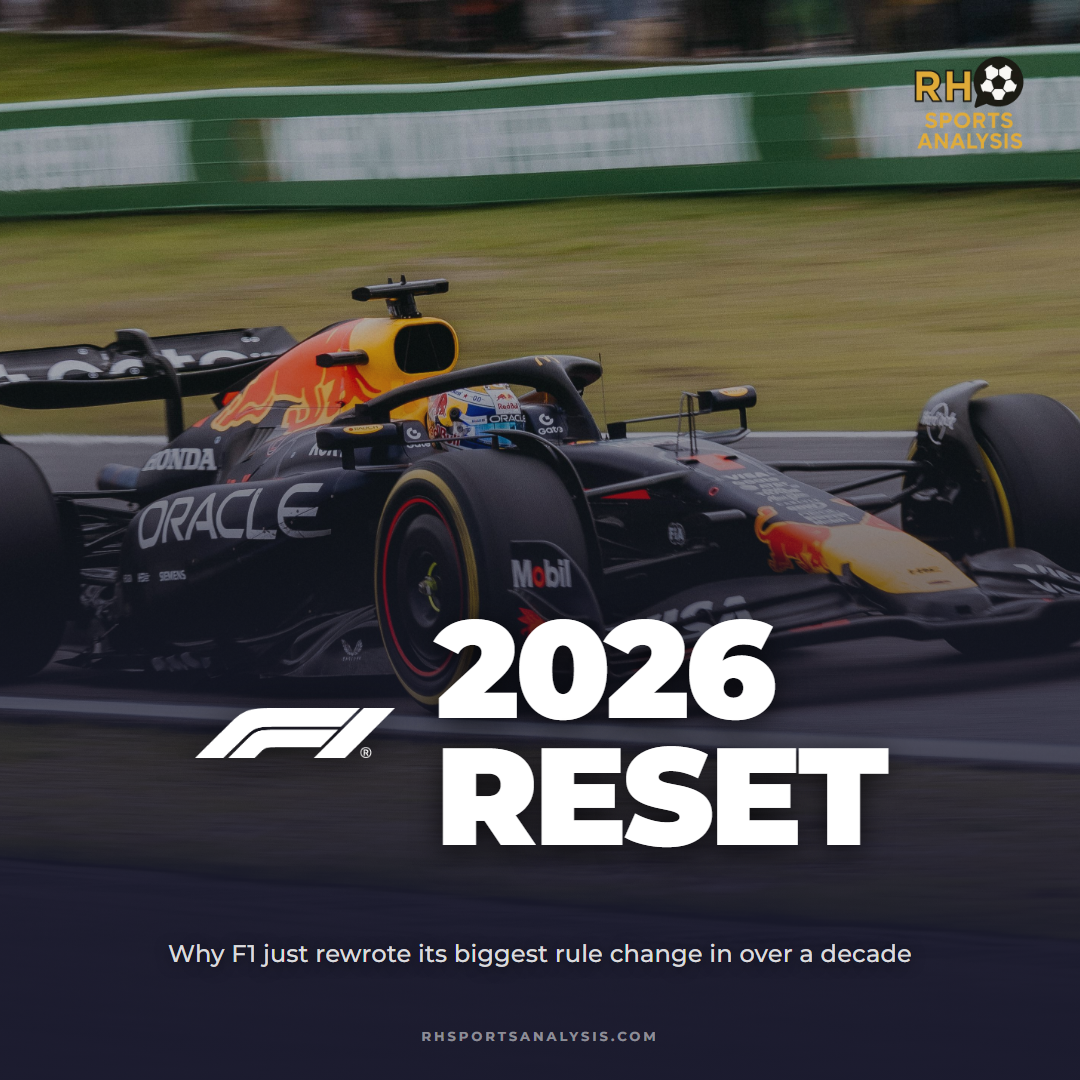
Formula 1 entered 2026 with the biggest rule change in over a decade. New engines, active aerodynamics, a fifty-fifty split between petrol and electric power, and a complete rewrite of how cars store and deploy energy around a lap. Three races in, the drivers were not happy, the racing did not look right, and the FIA agreed to change the new rules before the season was a month old.
The package of refinements ratified on the 20th of April for this weekend's Miami Grand Prix is the most significant in-season rewrite Formula 1 has staged in years.
What 2026 actually changed
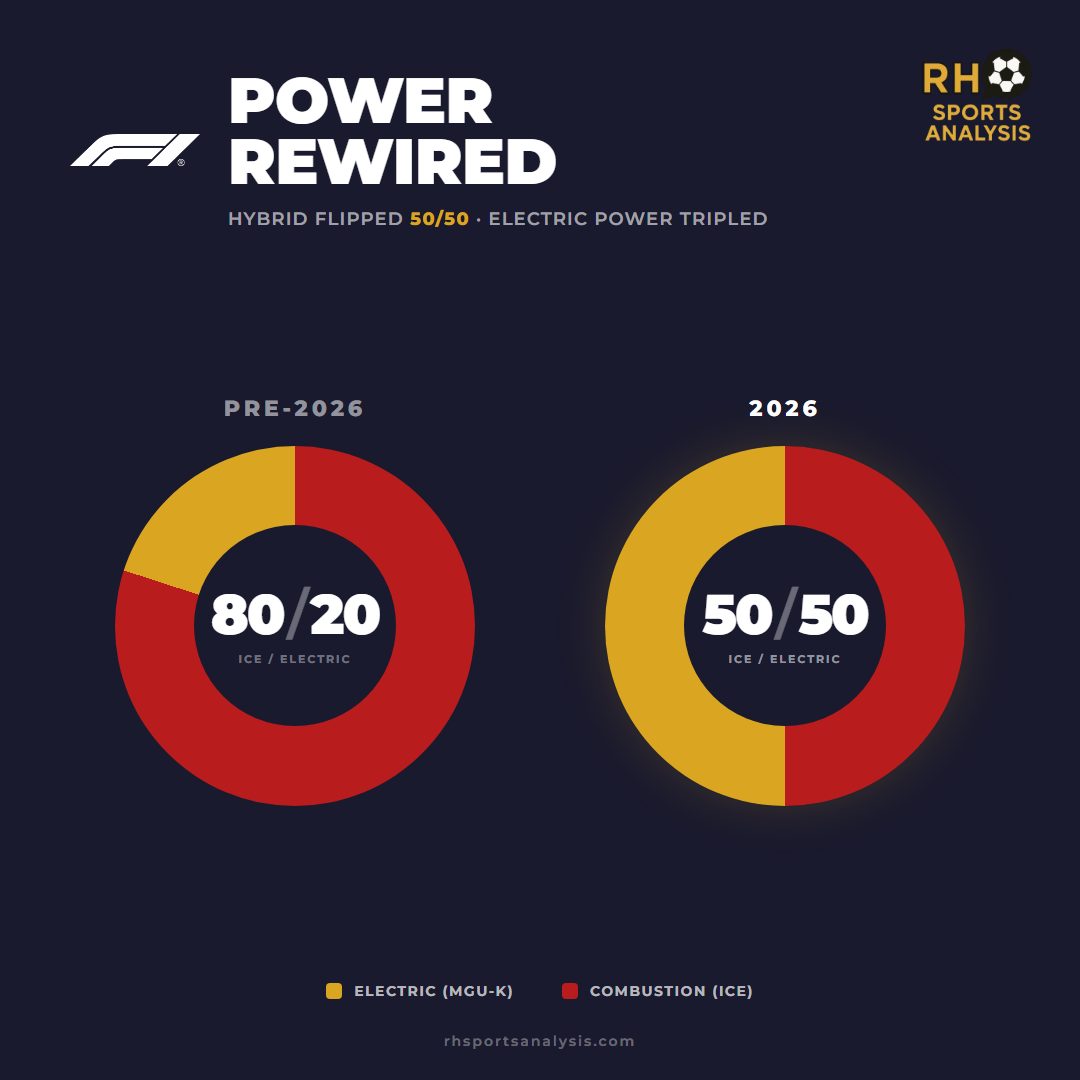
Formula 1 tore up its rulebook for 2026. The headline was the new power unit: the 1.6-litre V6 turbo engine carried over, but the electric side of the hybrid was tripled in power and the petrol side cut back, giving a near fifty-fifty split between combustion and electric energy where the old cars were closer to eighty-twenty. The amount of fuel a car can burn in a race dropped from 110 kilograms to 70, and the fuel itself became fully sustainable.
That shift forced a new way of driving. With less petrol available and a far more powerful electric motor, the drivers now have to actively manage when they harvest energy back into the battery and when they deploy it, lap after lap, corner after corner. The car does some of this automatically, but the driver controls a meaningful share of it through the throttle and through dedicated buttons on the steering wheel.
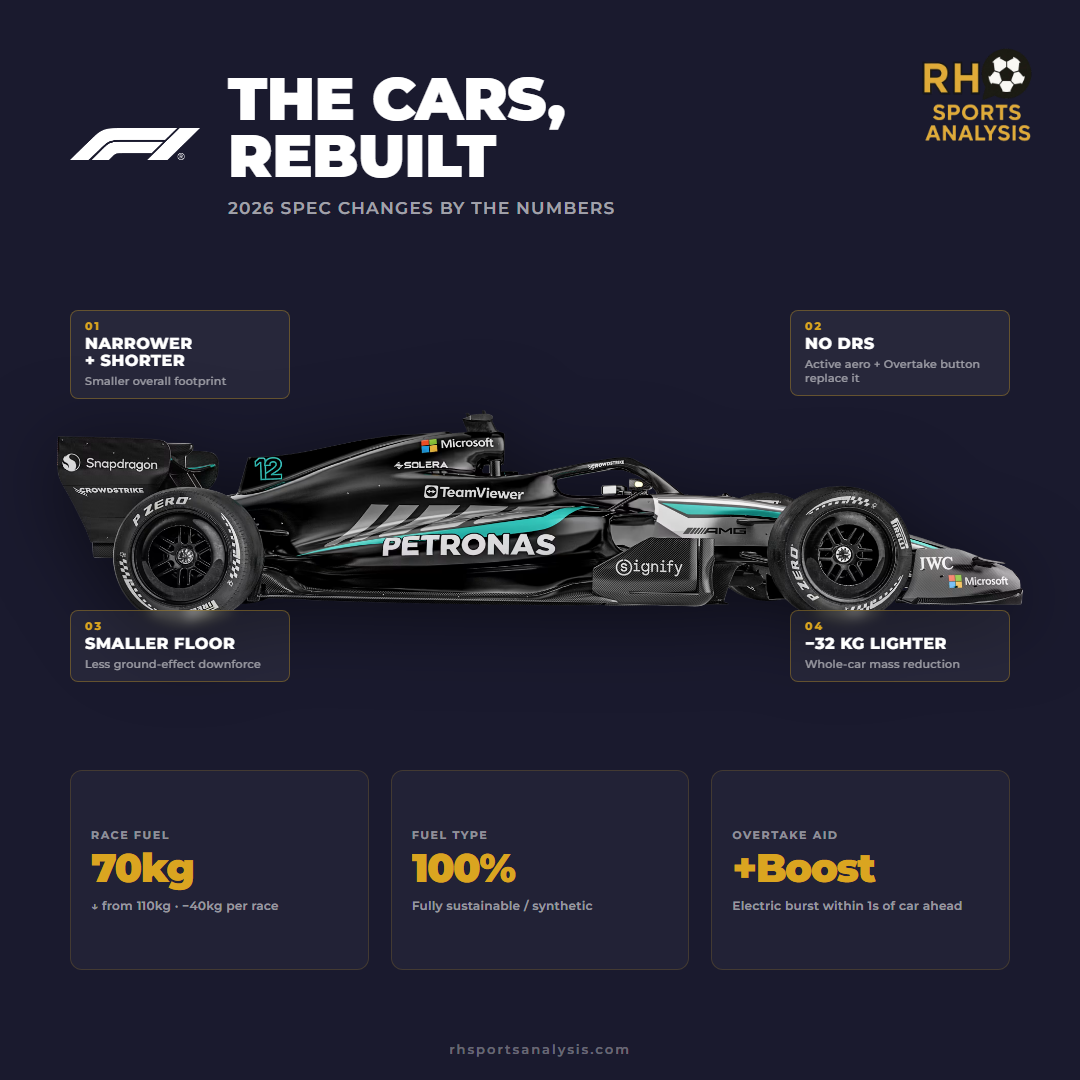
The cars themselves were also redesigned. The drag reduction system, the rear-wing flap that opened when a driver was within a second of the car ahead, was scrapped entirely. In its place came active aerodynamics: front and rear wings that the driver opens on designated straights for low drag and closes for cornering grip, with no proximity rule attached. A separate button called Overtake Mode replaces what DRS used to do, giving the chasing driver a burst of extra electric energy when they are within a second of the car ahead at a designated detection point each lap.
That is the rulebook the season started with. Three races in, the drivers had a list of complaints.
How drivers are meant to manage energy
The new system gives drivers a 4 megajoule battery, the same size cap that has been in place since the hybrid era began in 2014. What changed in 2026 is everything around it: drivers can now refill it from far more sources during a lap, and deploy it through a far more powerful electric motor. The most important of these new harvesting routes is called superclipping. Normally when a driver pins the throttle on a long straight, every bit of the engine's power goes to the rear wheels. With superclipping, the engine is still running flat out, but the car diverts some of that power into the battery instead of sending it all to the wheels. The throttle is fully open, the engine sounds the same, but the car accelerates less hard than it should because it is charging itself at the same time. Drivers also harvest energy under braking and when they lift off the throttle entering a corner, but superclipping is the one that drew the headlines because it happens at the moment the car looks like it should be flat out.
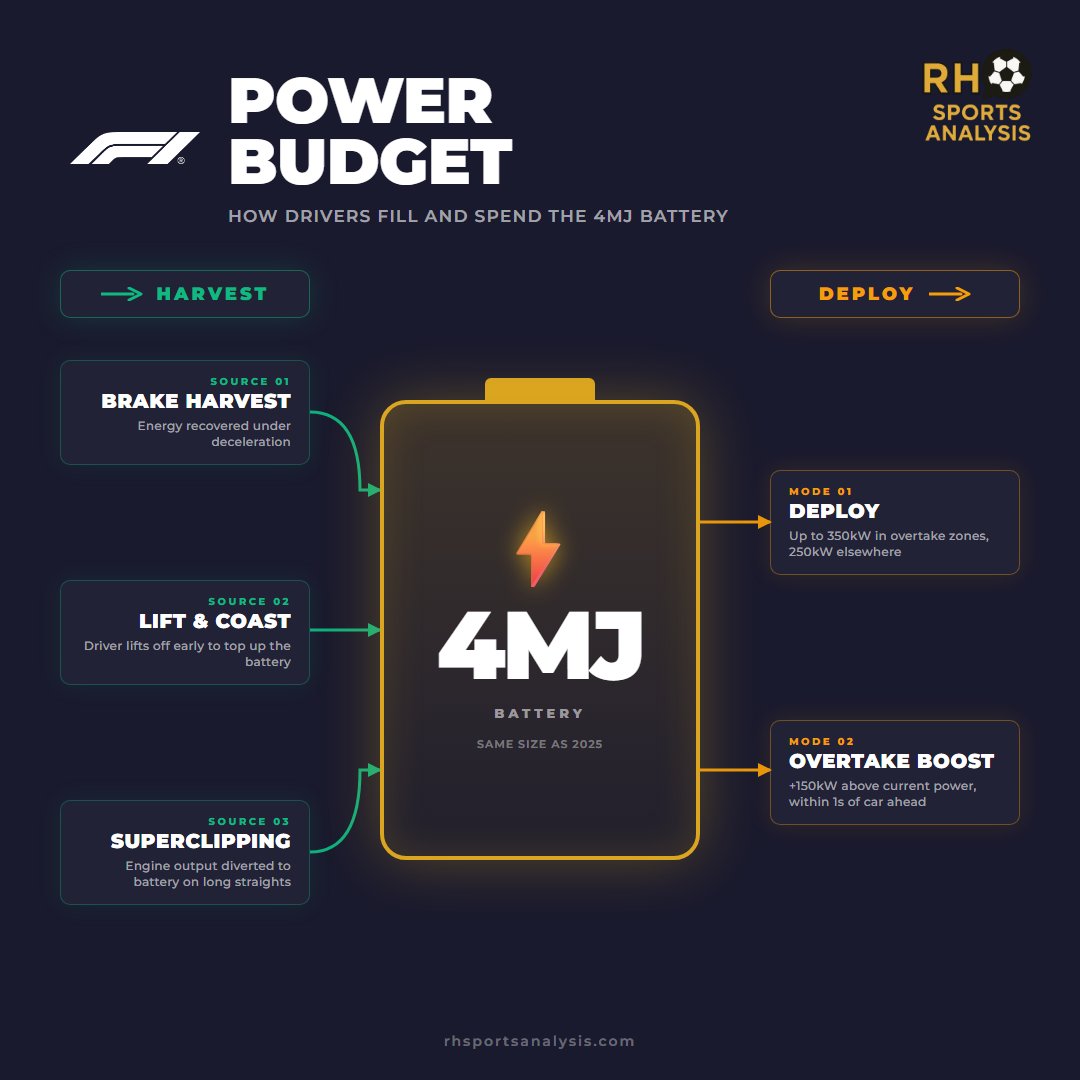
The opposite of superclipping is lift-and-coast. Here the driver lifts off the throttle earlier than the corner requires, sometimes hundreds of metres earlier, to either save fuel or harvest energy more aggressively. The car coasts toward the braking zone instead of accelerating into it. Drivers had used a version of this for years to manage fuel and tyre wear, but in 2026 it became a tool to manage electric energy too, and on the longest straights it became a routine part of every lap.
Both techniques are conservation moves, ways of giving back performance now to have it later. Drivers are not strangers to that trade. They have managed fuel loads, tyre wear and engine modes for as long as those things have mattered. The problem in 2026 is the volume of it. With the battery so much bigger and so central to lap time, energy conservation is no longer something a driver dips into when the strategy demands it. It runs through every lap, on every straight, and the cars stop behaving like cars meant to be driven flat out. That is what the drivers were complaining about from race one, and that is what the FIA spent the spring break trying to fix.
What the first three races showed
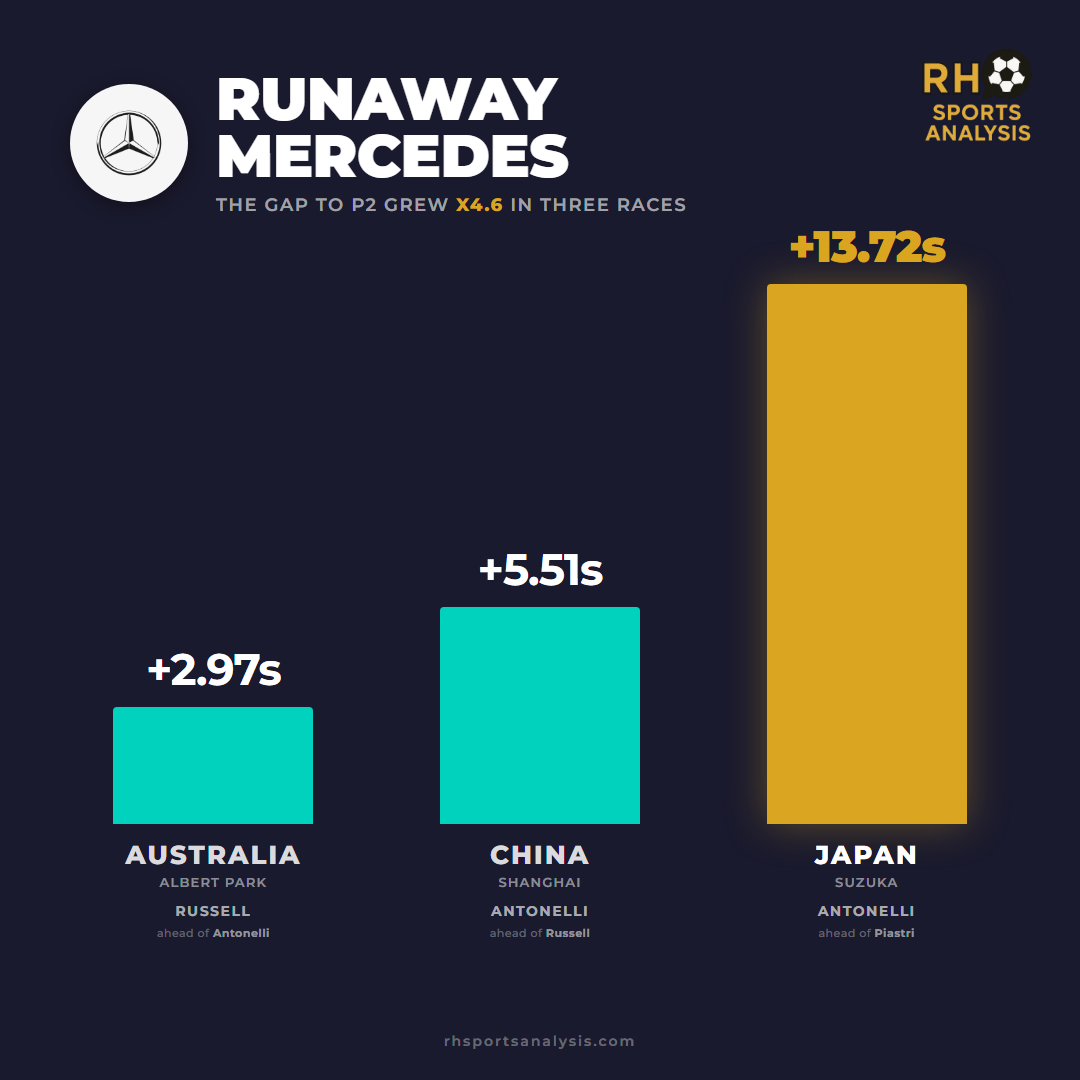
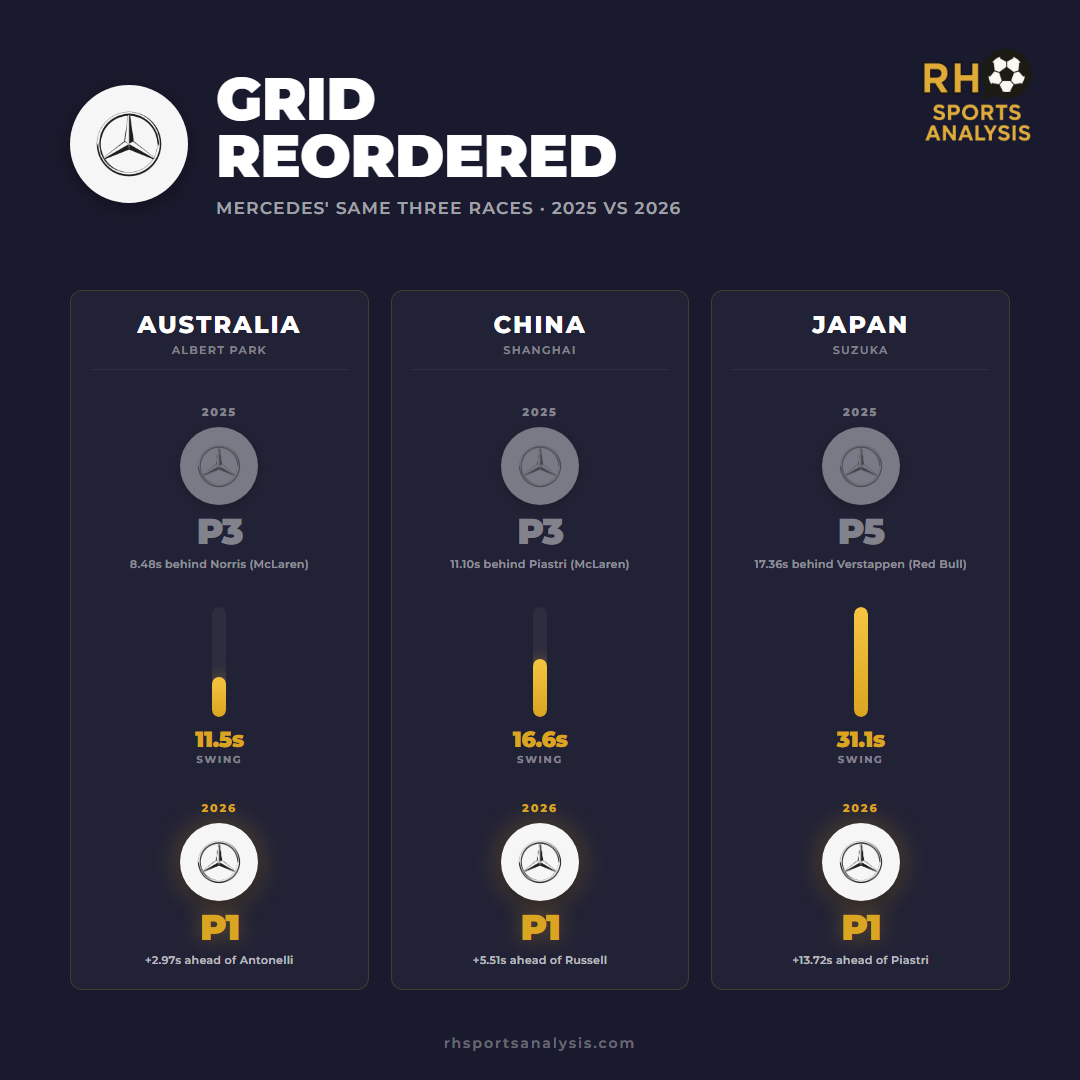
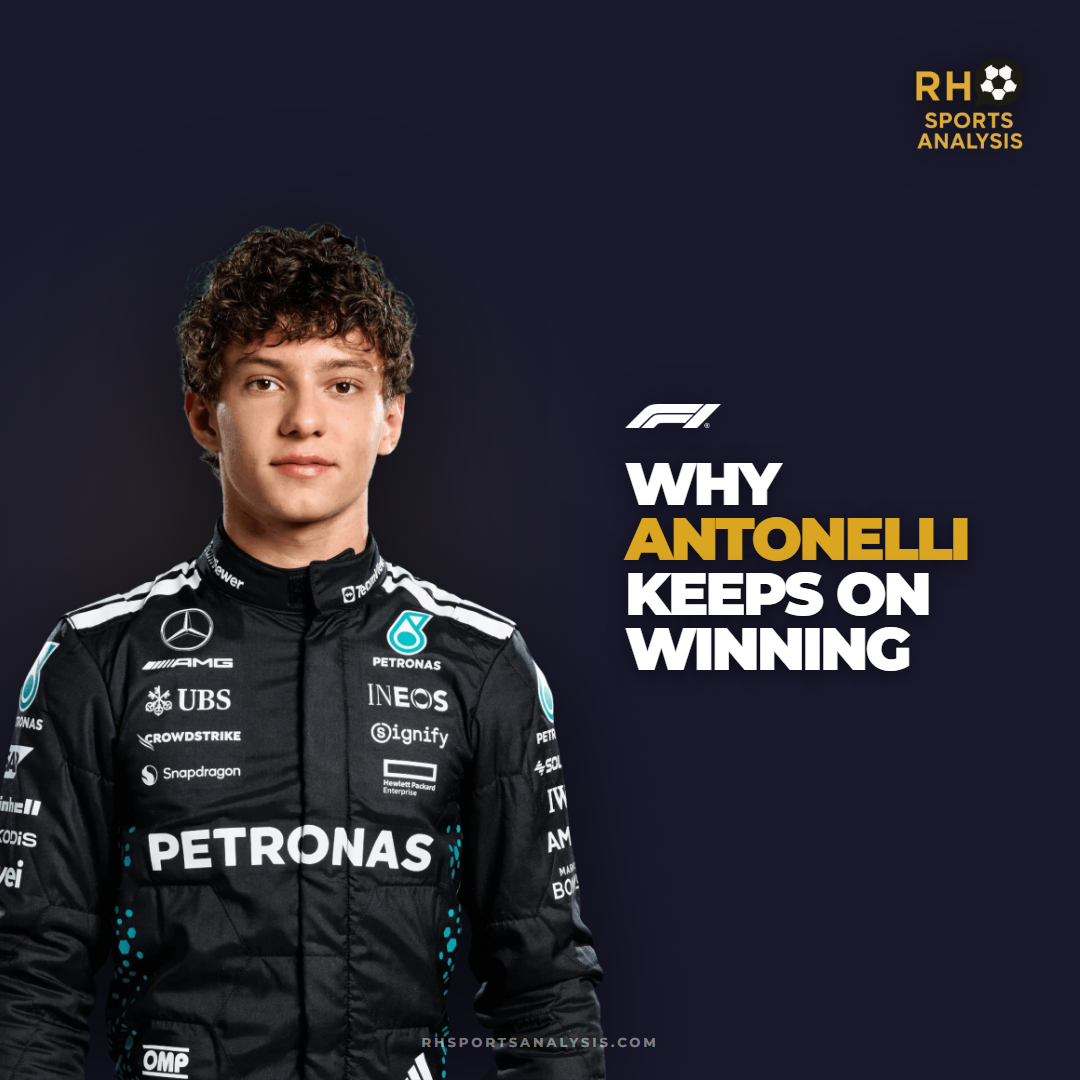
Mercedes won all three. George Russell led home a one-two in Australia, and the rookie Kimi Antonelli won in China and again in Japan. A year earlier, over the same three weekends, Mercedes had not won a single race and their best finish was a third place. The new regulations had completely reordered the grid.
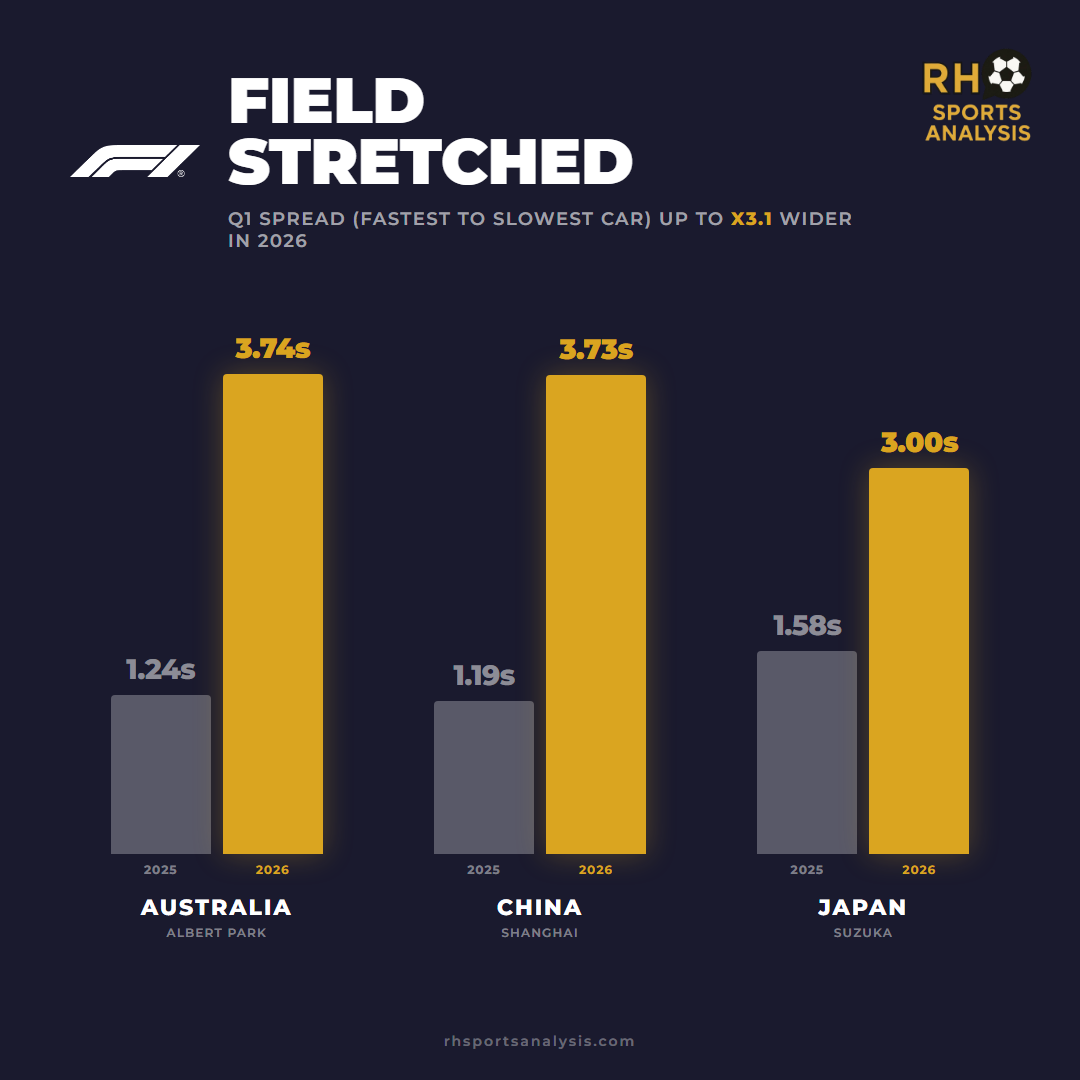
The pace gap was not just at the front. The spread between the fastest and slowest cars in Q1, the cleanest measure of how stretched the field was, almost tripled. The new regulations had pulled the grid apart, and the teams that arrived in March with the best handle on the new power unit, particularly on extracting energy efficiently, were a long way clear of those that did not.
What looked good on a timing screen looked stranger on television. With drivers superclipping and lifting to manage energy, qualifying laps were not the all-out efforts the format used to deliver. Charles Leclerc said the days of the “crazy lap” in Q3 were over, that throttle inputs of two or three percent, the kind of correction a driver makes by instinct, were now enough to confuse the engine's energy strategy and cost tenths on the next straight. Drivers were finishing qualifying frustrated rather than spent.
Racing carried the same problem in a different shape. Drivers had energy to overtake, but rarely enough to defend the position once they had taken it. A car would pass on one straight, run its battery flat doing it, and be re-passed on the next. The drivers gave the pattern a name. Russell described what he had felt as a “yo-yo effect” after his early battle with Leclerc in Australia. Lando Norris used the verb form after Suzuka, after a battle with Lewis Hamilton in which neither driver could hold a position for more than a straight at a time.
“This is not racing, this is yo-yoing. When you're just at the mercy of whatever the power unit delivers, the driver should be in control of it at least, and we're not.”
— Lando Norris
By the time the calendar reached its scheduled break in mid-April, the FIA had three weekends of data, a long list of driver complaints, and a meeting on the calendar that had been booked at the start of the season. The job of that meeting was to fix what the first three races had exposed.
What the FIA changed for Miami
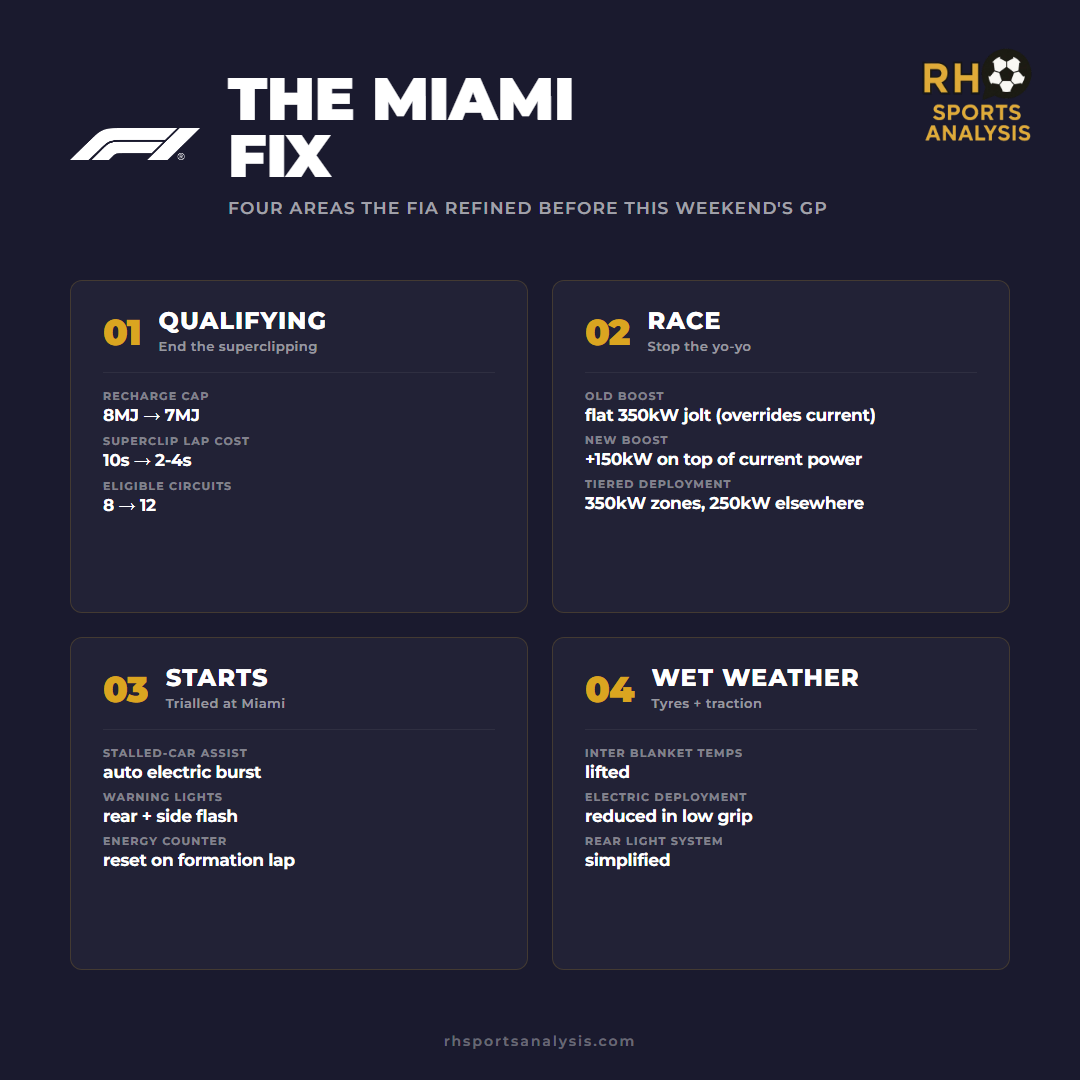
The package of refinements ratified on the 20th of April falls under four areas: qualifying, race, race starts, and wet conditions, each aimed at fixing one of the problems the first three races had exposed. The FIA framed them as a scalpel rather than a baseball bat, an attempt to take the edges off the worst behaviours without redesigning the regulations from scratch.
Group 01 / Qualifying
The aim was to make qualifying feel flat out again. The most discussed change was a new lower ceiling on how much energy a car can recharge per qualifying lap, dropping from 8 megajoules to 7 at the FIA's discretion. This is not a blanket reduction. It is a tool the FIA can now apply at energy-heavy circuits where superclipping is at its worst, and at Miami it is not being used. The number of circuits where the FIA can apply this lower limit was also expanded from 8 to 12, giving the governing body more flexibility at tracks like Spa, Monza and Silverstone where energy management has the biggest impact on lap time.
The third change here was a lift in the superclipping power cap, from 250 kilowatts to 350. The same amount of energy still goes into the battery, but the recharge happens faster, so drivers spend less of the lap with the throttle pinned and the car not accelerating. The FIA's target is to cut superclipping from around 10 seconds per lap at the worst circuits down to between 2 and 4.
Group 02 / Race
The aim here was to stop yo-yo racing in the races themselves. The Boost button, which had given drivers a full 350 kilowatt jolt of electric power on demand, was capped at an additional 150 kilowatts above whatever power level the car was already running. Drivers still get a meaningful kick when they press it, but the gap between a car on full boost and a car on a flat battery is much smaller, which removes the worst of the closing-speed problem. Alongside that, the cars now run two different deployment levels around a lap: the full 350 kilowatts of electric power is only available in designated overtaking zones, with a 250 kilowatt cap everywhere else. The aim is to keep overtaking on the straights where it is meant to happen and stop drivers running each other down at corners that were never meant to be overtaking points.
Group 03 / Starts
Both changes here are being trialled in Miami's free practice rather than adopted outright. A new low-power start detection system can now identify a car that has stalled or failed to launch properly off the line, and trigger an automatic burst of electric assistance to get it moving rather than leaving it as a stationary obstacle for the cars behind. A flashing rear and side light system warns following drivers that the car is in trouble. Separately, a quirk of the original rules that left some cars with depleted batteries on the formation lap, depending on where they were positioned on the grid, was fixed by resetting the energy counter at the start of the formation lap.
Group 04 / Wet weather
None of the cars had yet raced in the wet in 2026. Intermediate tyre blanket temperatures were lifted to give better initial grip, and electric power deployment was reduced to stop the rear wheels overwhelming the available grip in low-traction conditions. The rear light system was also simplified so following drivers could read what the car ahead was doing in poor visibility.
A scalpel, or a tickle
The team principal whose drivers had won every race so far called the changes a scalpel, not a baseball bat. Toto Wolff used the phrase on the morning of the meeting that ratified them, defending the work Mercedes did over the winter.
The four-time world champion sitting ninth in the standings called them something else. Max Verstappen, on Miami media day, described the package as a tickle.
“I just hope for next year, we can make really big, big changes.”
— Max Verstappen
For Verstappen, the problem with 2026 is not the recharge cap or the boost button or any single setting on the energy system. It is the 50/50 power split itself, the structural decision to put half the car's performance through the battery, and no edit to the deployment rules changes that.
Both readings have weight. Wolff is correct that the FIA acted with restraint, and that the alternative, a full mid-season regulatory rewrite, would have been worse. Verstappen is correct that the tweaks leave the underlying architecture untouched, and that the drivers who do not like the way 2026 cars feel will not like them more in Miami.
The piece of the package that targets Mercedes' advantage most directly, the lower recharge ceiling, is not even being applied at Miami. The first real test of how much the field will compress comes at the energy-heavy circuits later in the calendar. George Russell, asked about it before the weekend, said he expects the field to bunch up but not in one race. He pointed back to 2022, when Ferrari led the championship after three rounds and lost the title by the autumn. Three races is not a verdict.
What Miami offers is the first read on whether the scalpel cuts deep enough: whether qualifying is closer to flat out, whether overtakes hold for more than a straight, whether the gap between Mercedes and the rest is starting to compress. The answer to that lives in the next piece, after the data from Miami arrives.
The restart of the restart
The story of this Miami weekend is not the tweaks themselves, which are smaller than the headlines suggest, but the speed at which the FIA agreed to them. Drivers complained, the field stretched, and a rulebook that took years to write was rewritten in a fortnight.
What that says about 2026 depends on which seat you are sitting in. For Mercedes, the restart of the restart is a defence of the work they did; for Verstappen, it is proof that the deeper problem has not been touched. Everyone else gets the first piece of evidence that the sport is willing to keep adjusting until the racing looks like racing again. Miami will be the next.
Related reading
Our members receive data-driven selections across every sport we cover. Are you in?